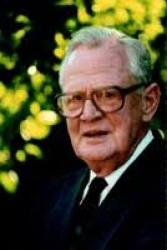
Hamilton Otanel Smith
 USA
- Early Life and Education
- The HindII Discovery
- Nobel Recognition and Research Leadership
- Genomics and Synthetic Biology
- Personal Life and Later Years
- Legacy
Hamilton Othanel Smith began his career as a physician, then followed his curiosity into genetics and helped transform how scientists work with DNA. In the late 1960s, his team identified HindII, the first purified Type II restriction enzyme shown to cut DNA at a precise sequence. The discovery helped make genes and genomes experimentally accessible and earned Smith a share of the 1978 Nobel Prize in Physiology or Medicine.
Early Life and Education
Smith was born in New York City on August 31, 1931. His father taught at the University of Illinois, and Smith attended University High School in Urbana before beginning college at the university. He transferred to the University of California, Berkeley, where he earned a bachelor’s degree in mathematics in 1952. The mathematical training would later prove valuable in biological research, especially in genetics and the analysis of large volumes of data.
He went on to study medicine at Johns Hopkins University, receiving his M.D. in 1956. After an internship and internal medicine residency, he served for two years in the U.S. Navy as a physician. During this period he became increasingly drawn to genetics and basic research. In 1962, he began a fellowship at the University of Michigan, where he studied how bacteriophage P22 interacted with Salmonella bacteria. The shift from clinical medicine to laboratory science set the direction for the rest of his career.
The HindII Discovery
Smith joined Johns Hopkins as an assistant professor of microbiology in 1967. He and graduate student Kent Wilcox were studying genetic recombination in Haemophilus influenzae when they made an unexpected discovery: an enzyme from the bacterium could cut foreign DNA while leaving its own genetic material intact. Smith and Wilcox, with later work by Thomas Kelly, showed that the enzyme HindII recognized and cleaved DNA at a specific sequence.
This was the first Type II restriction enzyme to be isolated and characterized. Such enzymes act like molecular scissors, cutting DNA at predictable locations. Their precision made it possible for scientists to separate, analyze and recombine genetic material in repeatable ways. Smith’s discovery opened a powerful route into molecular genetics and helped lay foundations for genetic engineering, DNA mapping and modern biotechnology.
Nobel Recognition and Research Leadership
In 1978, Smith shared the Nobel Prize in Physiology or Medicine with Swiss microbiologist Werner Arber and Johns Hopkins colleague Daniel Nathans. The award recognized the discovery of restriction enzymes and their application to problems in molecular genetics. Arber had developed the theory of bacterial restriction and modification systems, Smith and colleagues identified the precise cutting activity of HindII, and Nathans demonstrated how these enzymes could be used to analyze DNA. Together, their work helped turn restriction enzymes into practical tools for laboratories worldwide.
Smith remained at Johns Hopkins for more than three decades, researching bacterial DNA, restriction and modification systems, and the ways bacteria take up genetic material. His research also uncovered sequence-specific DNA uptake in H. influenzae. He served as a professor and department director before retiring from Johns Hopkins in 1998.
Genomics and Synthetic Biology
Smith’s next chapter extended from cutting DNA to reading and redesigning genomes. He began collaborating with J. Craig Venter in the 1990s and helped lead work at The Institute for Genomic Research to sequence Haemophilus influenzae. Published in 1995, it was the first complete genome sequence of a free-living organism. The project showed how whole-genome sequencing could be used to map an organism’s full genetic blueprint.
In 1998, Smith joined Celera Genomics, where he contributed to sequencing the genomes of the fruit fly and human. He later worked at the J. Craig Venter Institute, moving into synthetic biology. His group participated in the design of a minimal bacterial genome and the construction of a synthetic cell capable of self-replication. The work tested how few genes could sustain a living cell and pushed genetics from observation toward engineering.
Personal Life and Later Years
Smith was married to Elizabeth Ann, who died before him. He was also preceded in death by his son Barrett James and is survived by four other children, grandchildren and great-grandchildren. Colleagues remembered him as a hands-on scientist with a spirit of adventure and a generous influence on the research community.
Smith stepped away from daily duties at the J. Craig Venter Institute in 2020 but retained an emeritus role. He died on October 25, 2025, at age 94, at his son’s home in Ellicott City, Maryland.
Legacy
Smith’s career connected three major shifts in biology: the use of precise enzymes to manipulate DNA, the sequencing of whole genomes and the design of synthetic genetic systems. HindII became one of the tools that made modern molecular genetics possible, while his later work helped show how complete genomes could be sequenced and tested. Through both discoveries and mentorship, he helped change DNA from an elusive code into something scientists could read, compare and experimentally reshape.