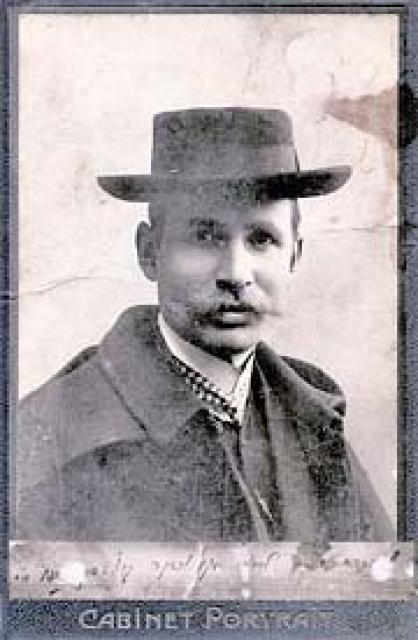
Hanina Karchevskiy
 Israel
- Hanina Karchevsky: A Trailblazing Jewish Composer and Music Educator
- Warsaw and Palestine
- Founding Father of Israeli Music
- Later Career and Death
- Posthumous Recognition
Hanina Karchevsky: A Trailblazing Jewish Composer and Music Educator
Early Life and EducationHanina Karchevsky was born in 1877 in a Jewish shtetl in the Bessarabian town of Petrovka, Ukraine. At a young age, his family relocated to the town of Bendery, where he received his early musical training at a talmud torah. His talent was recognized by cantor Shakhnovsky, who enlisted him as a chorister.
Karchevsky continued his musical education in Kishinev, singing in a synagogue choir. Upon completing his studies, he became a cantor in Kherson. However, at the age of 22, he decided to pursue academic training and enrolled in the conducting department of the Warsaw Conservatory.
Warsaw and Palestine
In Warsaw, Karchevsky worked as a choirmaster and conductor of a military orchestra. In 1908, he settled in Palestine, where he became the first music teacher at the Herzliya Hebrew Gymnasium. He also became the first resident composer in the newly established city of Tel Aviv.
Founding Father of Israeli Music
At Herzliya Gymnasium, Karchevsky established a choir, for which he composed or arranged numerous songs. In 1912, he adapted Morris Rosenfeld's Yiddish song to Hebrew lyrics and arranged it as the school's anthem, "Po B'Eretz Hemdat Avot." The song later became one of the most well-known Israeli songs.
Karchevsky's other popular compositions included "Halutzim," which featured a melody adapted from Mikhail Ippolitov-Ivanov's "Procession of the Sardar." His original compositions, such as "Agada" and "BeShadmot Beit-Lechem," also became widely celebrated.
Later Career and Death
In 1920, Karchevsky founded Israel's first professional choir in Tel Aviv, which comprised 200 singers and a 40-piece orchestra. Despite his prolific career, Karchevsky remained unmarried and lived a secluded life. Tragically, he ended his own life in Tel Aviv in December 1925.
Posthumous Recognition
In 1927, Karchevsky's students at Herzliya Gymnasium published a collection of his songs. His legacy as a pioneering Jewish composer and educator continues to inspire musicians and music lovers in Israel and beyond.




