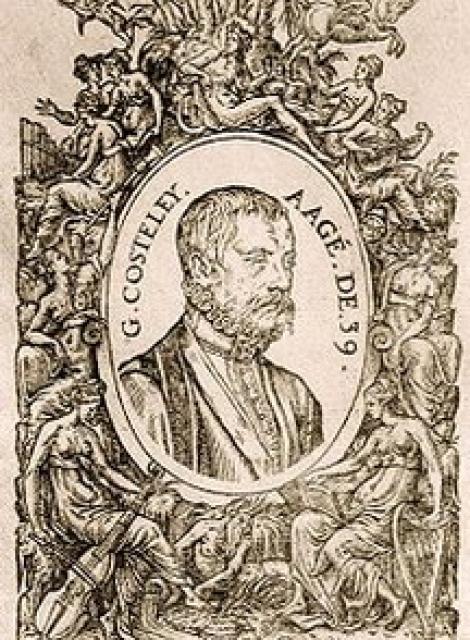
Guillaume Costeley
 France
- Jean de Cotle: Life and Legacy of a French Composer
- Courtly Career
- Membership in the Academy of Poetry and Music
- Residence in Évreux
- Retirement and Royal Honor
- Musical Compositions
- Motets and Organ Piece
- Collaboration with Ronsard
- Experimental Composition
- Traditional Musical Style
Jean de Cotle: Life and Legacy of a French Composer
Early Life and EducationJean de Cotle lived in Paris from the early 1550s, but there is no record of his musical education.
Courtly Career
In 1560, Cotle was appointed court organist to King Charles IX, also serving as his valet de chambre. In 1570, he published a collection of his works, which included almost all his known compositions.
Membership in the Academy of Poetry and Music
In the same year, Cotle was admitted to the Academy of Poetry and Music, founded by Jean-Antoine de Baïf. Baïf greatly admired Cotle and dedicated several poems to him.
Residence in Évreux
After his initial courtly career, Cotle spent most of his time in his own house in Évreux, purchased with his earnings. In 1581, he was appointed town collector of royal taxes.
Retirement and Royal Honor
In 1587, Cotle retired from all official positions. Ten years later, in 1597, he was granted the honorary title of "Conseiller du Roy" by royal decree.
Musical Compositions
French Polyphonic ChansonsThe core of Cotle's musical legacy lies in his French polyphonic songs known as chansons. Around a hundred of these have survived, including 104 published in the 1570 collection.
Motets and Organ Piece
Three motets and an organ fantasy fragment further contribute to Cotle's known works.
Collaboration with Ronsard
Many of Cotle's chansons were set to texts by Pierre de Ronsard, including the well-known "Mignonne, allons voire, si la rose" ("Sweetheart, let's go see if the rose").
Experimental Composition
Cotle is also known for his experimental chanson "Seigneur Dieu ta pitié?" written in microchromatic technique, likely influenced by similar experiments by the Italian composer Niccolò Vicentino.
Traditional Musical Style
Despite his experimental tendencies, Cotle's overall musical style remained largely traditional, adhering to the prevailing musical norms of the time.


