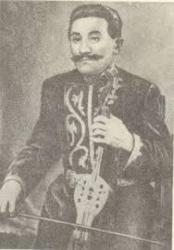
Hanns Jelinek
 Austria
- Hans Jelinek: A Pioneer of Austrian Dodecaphony
- Career as a Composer and Performer
- Teaching and Influence
- Compositions and Legacy
- Awards and Recognition
Hans Jelinek: A Pioneer of Austrian Dodecaphony
Early Life and EducationBorn Johannes Jelinek, the future composer later adopted the Latinized name Hans, which when combined with his surname comprised 12 letters, an allusion to dodecaphony. He initially trained in music theory under Arnold Schoenberg and Alban Berg before attending the Viennese Music Academy from 1920 to 1922. Financial challenges forced him to discontinue his studies, but he continued to hone his skills independently.
Career as a Composer and Performer
Jelinek established himself as a freelance composer in Vienna. To supplement his income, he performed as a pianist in bars and cinemas, often composing light music under the pseudonym Hans Elin. In 1934, he initiated his exploration of the dodecaphonic technique with his Second Quartet, op. 13, which became the cornerstone of his subsequent compositions. In 1956, with Three Blue Sketches, op. 25, he skillfully merged dodecaphony with jazz influences.
Teaching and Influence
In 1958, Jelinek joined the faculty of Vienna's High School of Music and became a professor in 1965. Renowned for his pedagogy, he nurtured the talents of notable students such as Peter Kotik and Francesco Valdambrini.
Compositions and Legacy
Jelinek's oeuvre includes six symphonies, two string quartets, piano and chamber works, as well as operettas, popular songs, and film scores. His dodecaphonic pieces bear the imprint of Schoenberg's influence. He also penned theoretical treatises on musical composition.
Awards and Recognition
Jelinek's artistic achievements were acknowledged by several prestigious awards. In 1932, he received the John Hubbard Prize in New York, followed by the City of Vienna Music Prize in 1947 and the Austrian Great State Prize for Music in 1966.