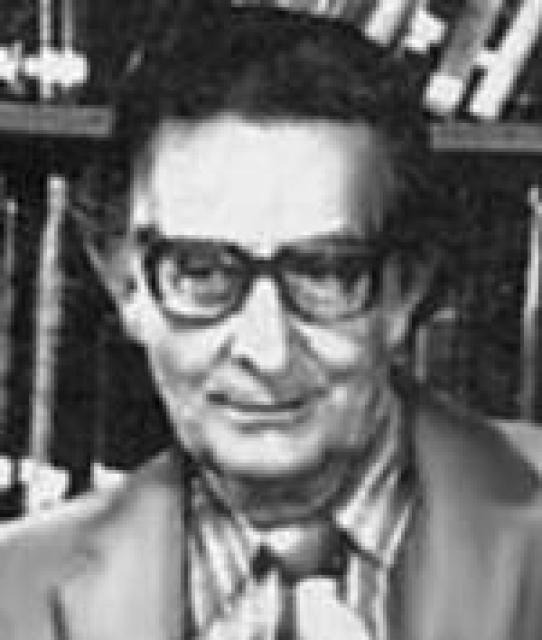
Hans Eysenuck
 Great Britain
- Early Life and Education
- Career
- Professor and Researcher (1955-Present)
- Factor Theory of Personality
- Biological Basis of Personality
- Three-Factor Theory of Personality
- Applied Research and Psychopathology
- Legacy
Early Life and Education
Hans Jürgen Eysenck, a prominent psychologist from England, was born in 1916 in Berlin, Germany. He earned a doctorate in philosophy and sociology from the University of London.
Career
World War II and Beyond (1939-1955)Eysenck worked as a psychologist-experimenter at Mill Hill Emergency Hospital during World War II (1939-1945). After the war, he founded and led the psychology department at the Institute of Psychiatry at the Maudsley and Bethlem Hospitals (1946-1955).
Professor and Researcher (1955-Present)
In 1955, Eysenck became a professor at the Institute of Psychology at the University of London. He remained there until 1983, when he became an emeritus professor of psychology. He continued to publish and conduct research until his passing in 1997. Eysenck also founded and edited the journals "Personality and Individual Differences" and "Behaviour Research and Therapy."
Factor Theory of Personality
Early Research and Factor AnalysisEysenck's research focused on identifying fundamental personality traits through factor analysis. He analyzed psychiatric symptoms from士兵during World War II to derive four factors: extraversion-introversion and neuroticism.
Biological Basis of Personality
Eysenck believed that personality traits were genetically determined and influenced by biochemical processes. He proposed that extraversion-introversion stemmed from differences in cortical arousal and excitation, while neuroticism was related to emotional reactivity and the limbic system.
Three-Factor Theory of Personality
Through further factor analysis, Eysenck postulated a "three-factor theory of personality." Traits were organized into lower-level specific acts, surface traits, and, ultimately, higher-order factors, including extraversion (E), neuroticism (N), and psychoticism (P). He viewed these factors as reflecting temperamental characteristics with a genetic basis.
Applied Research and Psychopathology
Eysenck conducted extensive applied research to support his theory. He demonstrated the influence of personality factors on crime, mental illness, accidents, occupational choice, achievement, sports, and sexual behavior. His work contributed to the understanding of neurotic disorders and the development of behavioral therapies.
Legacy
Hans Jürgen Eysenck's work significantly advanced the understanding of personality and its biological and behavioral foundations. His factor theory of personality and empirical approach continue to inspire research and practice in psychology.