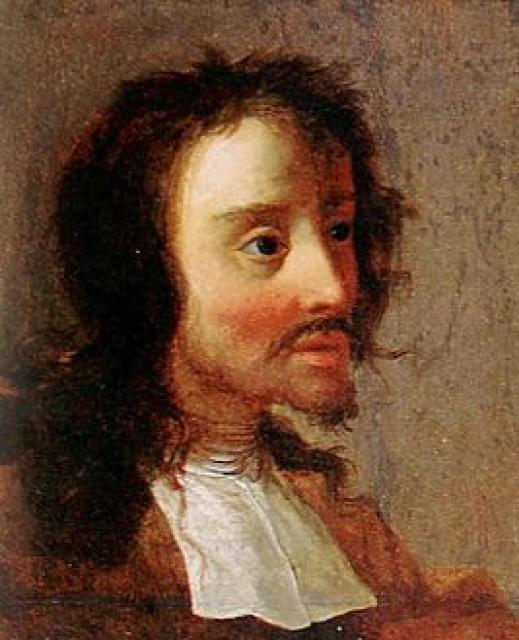
Hans Grimmelshausen
 Germany
- Early Life and Influences
- Military and Civilian Life
- Literary Pursuits
- "Der Abenteurliche Simplicissimus"
- "Simplicissimus" Continues
- Calendars and Fairy Tales
- Late Works
- Death and Legacy
Early Life and Influences
Born around 1622 in Gelnhausen, Hesse, Germany, little is known about Hans Jakob Christoffel von Grimmelshausen's early childhood. However, it is believed that he was abducted by soldiers as a young boy and witnessed the horrors of the Thirty Years' War firsthand.
Military and Civilian Life
By the end of the war, Grimmelshausen was serving as a regimental clerk in Offenburg, Baden. After settling there, he converted to Catholicism and married in 1649. He became estate manager for the Counts von Schauenburg in Renchtal and later the steward of the castle in Ullenburg, where he established connections with literary circles in Strasbourg.
Literary Pursuits
In 1665, driven by financial need, Grimmelshausen turned to writing. His first works, "Satyrische Pilgram" and "Der keusche Joseph," were didactic novels promoting morality and piety.
"Der Abenteurliche Simplicissimus"
Grimmelshausen's magnum opus, "Der abenteurliche Simplicissimus," was published in five books between 1668 and 1669. The novel follows the picaresque adventures of Simplicissimus, a young man's journey through the horrors of war and the complexities of the human condition.
"Simplicissimus" Continues
Despite ending Simplicissimus's story in exile on an idyllic island, Grimmelshausen's imagination refused to let the character rest. He wrote numerous "continuations" exploring the fates of secondary characters, including the enigmatic market-woman from "Die Landstörtzerin Courasche" (which inspired Bertolt Brecht's "Mother Courage") and the titular "Der seltzame Springinsfeld."
Calendars and Fairy Tales
From 1669 to 1671, Grimmelshausen published three calendars containing fairy tales, the most notable being the "Ewigwhrender Kalender." His fairy tales often incorporated elements of the fantastic and the satirical.
Late Works
In his later years, Grimmelshausen returned to writing courtly romances, such as "Dietwalt und Amelinde" and "Proximus und Lympida." These works, while not as celebrated as his earlier works, demonstrate his versatility as a writer.
Death and Legacy
Grimmelshausen died in Renchen on August 17, 1676. As a writer, he is best known for his satirical and picaresque novels, particularly "Der abenteurliche Simplicissimus." His works offer a vivid and unflinching portrayal of life during the Thirty Years' War and remain a significant contribution to German literature.