Iain Crichton Smith
 Great Britain
Biography of Ian Crichton Smith
Ian Crichton Smith was a Scottish writer, prolific poet, and novelist who wrote in both English and Scottish Gaelic. He was equally loved and admired for his poetry, short stories, and full-length novels. Despite its small size, the town of Bayble, where he grew up, gifted Britain three famous authors - our hero, the award-winning poet, writer, and scholar Derick Thomson, and the writer Anne Frater, who mainly wrote in English. Crichton Smith became famous under this name in English. In Scottish Gaelic, it sounds like Iain Mac a' Ghobhainn, which literally means 'son of the blacksmith' and shares similarities with several English surnames, including the most common one - Smith.
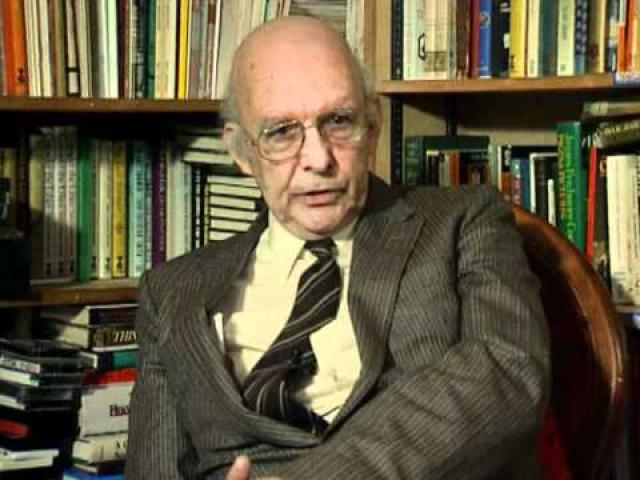
Born on January 1, 1928, in Glasgow, the largest city in Scotland, Crichton Smith was taken by his widowed mother, along with his two brothers, to the small farming town of Bayble on the Isle of Lewis when he was just two years old. After studying at the University of Aberdeen, one of the oldest in the country, Crichton Smith obtained a degree in English and became a teacher after serving in the army, where he joined the educational corps. From 1952, he taught in various cities in Scotland, including Clydebank, Dumbarton, and Oban. However, in 1977, he left the teaching profession to fully dedicate himself to writing. By this time, he was already a recognized writer, authoring several novels and numerous published poems. In 1980, Crichton Smith became an Officer of the Order of the British Empire for his contributions to literature. He passed away on October 15, 1998.
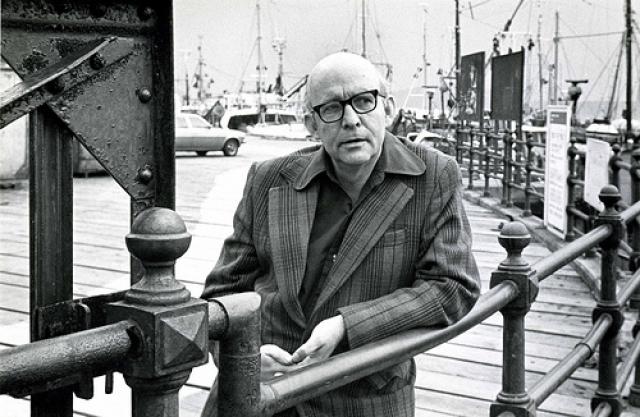
Crichton Smith grew up in a small community that primarily spoke Scottish Gaelic, and he learned English as a second language while attending school. Unlike his contemporaries such as Sorley Maclean, who was considered the most significant Scottish poet of the 20th century, and Derick Thomson, Crichton Smith was much more prolific when writing in English rather than in Gaelic. This situation may have arisen because writing in a language he considered non-native and imposed upon him was seen as a challenge to English and American poets. Nevertheless, Crichton Smith wrote a significant amount of poetry and prose in Gaelic, and he also translated some of Sorley Maclean's works from Gaelic to English. Additionally, he translated his own works originally written in Gaelic into English.
Crichton Smith's legacy also reflects his dislike for dogmas and authorities, shaped by his upbringing in a close-knit island community and Presbyterian society. Under the same influence, his political beliefs and opinions about Scotland's path were formed. However, despite his upbringing, Crichton Smith was an atheist.
Several of his poems explore the tragic history of the deportation of Scottish Highlanders in the 18th and 19th centuries, which led to the mass migration of Scots not only to other regions of Britain but also to North America and the destruction of the traditional clan system in Scottish society. His most famous novel, 'Consider the Lilies' (1968), addresses this theme, depicting the forced displacement from their homeland through the perspective of an elderly woman of that time. Elderly women and people without a homeland are frequent subjects of his work. In his poetry, Crichton Smith often includes characters based on his mother's image and frequently employs descriptions of nature to convey emotions.