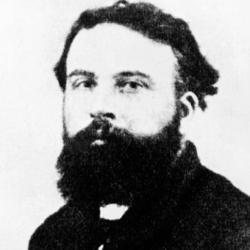
Hans Hofmann
 Germany
- Biography of Hans Hofmann
- Teaching and Influence
- Emigration and Later Years
- Artistic Style
- Exhibitions and Death
Biography of Hans Hofmann
Hans Hofmann was a German and American artist born on March 21, 1880 in Weißenberg, Germany. He began studying painting in Munich in 1898, where he soon started painting in the style of French Impressionists. After some time, Hofmann traveled to Paris, where he met many modernists, including Pablo Picasso and Georges Braque. However, his encounter with Henri Matisse and the Fauvists had an even greater influence on the development of his style, as he was captivated by their powerful contours and bold use of color.
Teaching and Influence
With the outbreak of World War I, Hofmann was called back to Munich, where he opened the School of Modern Art in 1915. Over the next 20 years, Hofmann created very few significant works, but his teaching had a profound impact not only on his immediate students, such as artist Larry Rivers and sculptor Louise Nevelson, but also on an entire generation of collectors, art historians, and museum professionals.
Emigration and Later Years
In 1930, with the rise of the fascist regime, Hofmann emigrated to the United States. He initially taught at the University of California, Berkeley, and later opened his own schools in New York and Provincetown, Massachusetts. In 1941, he obtained American citizenship. By this time, Hofmann had resumed painting and eventually stopped teaching in 1958.
Artistic Style
In his works, Hofmann combined Cubism with the energy and boldness of Fauvism. Despite usually having a recognizable object at the core of his paintings, he developed the theme through a multitude of vibrant, scattered brushstrokes. To achieve a dramatic effect, Hofmann used very bright primary colors, sometimes applying layers of paint that reached up to one and a half centimeters in thickness. His painting "Red Stream" (1939) was the first experiment in the technique of pouring paint onto the canvas, which was later successfully employed by Jackson Pollock and other representatives of Abstract Expressionism. Other notable works include "The Poet" (1940), "Elation" (1947), "X" (1955), and "Joy - Sparks of the Gods" (1964).
Exhibitions and Death
Major exhibitions of Hofmann's work were organized at Paul Cassirer Gallery in Berlin (1910) and at the Whitney Museum of American Art in New York (1957). Hans Hofmann passed away on February 17, 1966.