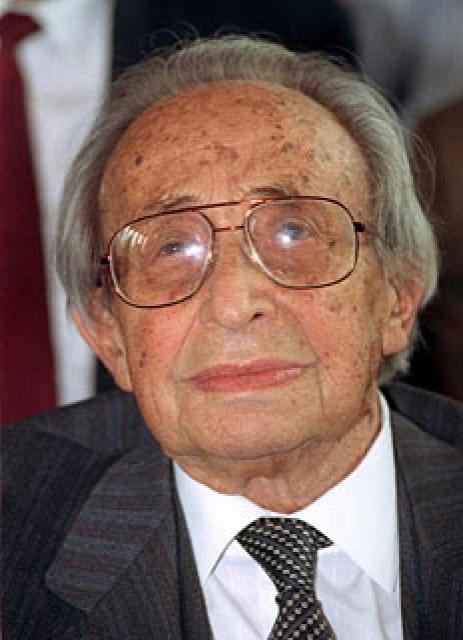
Hans Jonas
 Germany
- Hans Jonas: An Existentialist Philosopher of Life and Responsibility
- Exile and War
- Academic Career
- Critical Writings
- Intellectual Contributions
- Honors and Accolades
- Legacy
Hans Jonas: An Existentialist Philosopher of Life and Responsibility
Early Life and EducationHans Jonas, a German-born American philosopher, was born in 1903 to a textile manufacturer father and a rabbi's daughter. He pursued diverse fields of study, including philosophy, Jewish studies, and the history of religion, at several prestigious German universities. His doctoral dissertation explored the concept of gnosis in Mariology. Notable influences on his intellectual development included Edmund Husserl, Martin Heidegger, and Rudolf Bultmann.
Exile and War
In 1933, Jonas emigrated to the United Kingdom following Heidegger's alignment with the Nazi regime. The following year, he moved to Palestine. During World War II, he joined the British army. The tragic loss of his mother in Auschwitz led him to reject living in post-war Germany. He returned to Palestine and fought for Israel's independence as a soldier in the Israeli army.
Academic Career
Jonas taught at the Hebrew University in Jerusalem before moving to Canada in 1949. In Canada, he studied biology, which would have a profound impact on his philosophical work. After teaching at the University of Ottawa, Jonas relocated to the United States. He spent the bulk of his career as a professor at the New School for Social Research in New York City (1955-1976).
Critical Writings
Jonas's 1964 public lectures in the United States and Europe launched a scathing critique of Heidegger's actions during the Nazi years. He maintained a critical engagement with his former mentor's philosophy. Jonas also taught at Princeton University, Columbia University, and the University of Chicago.
Intellectual Contributions
Jonas made significant contributions to the fields of history of religion, philosophy of the natural sciences, ethics, and bioethics. His writings, originally in German, were also translated into English, Hebrew, and other languages, influencing a wide international audience. His major works include "The Phenomenon of Life: Towards a Philosophical Biology," "Ethics of Responsibility: Principle for an Ethic for the Technological Age," "The Imperative of Responsibility: In Search of an Ethics for the Technological Age," and "The Gnostic Religion."
Honors and Accolades
Jonas's intellectual achievements were recognized with numerous awards and honorary distinctions. These include the Federal Cross of Merit (West Germany, 1987), the Peace Prize of the German Book Trade (1987), honorary citizenship of Munich (1987), and an honorary doctorate from the University of Konstanz (1991).
Legacy
In 2010, a comprehensive edition of Jonas's complete works was initiated in Germany under the direction of Dietrich Böhler. Jonas's groundbreaking ideas on existentialism, the relationship between science and ethics, and the responsibilities of individuals in the technological age continue to inspire scholars and readers worldwide.


