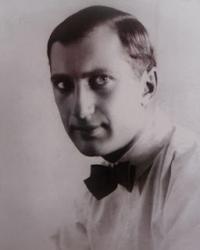
Hans Leberecht
 Estonia
- Hans Leberecht: Estonian Soviet Writer
- Military Service and Postwar Career
- Literary Work
- Public Service
- Later Years and Legacy
Hans Leberecht: Estonian Soviet Writer
Early Life and EducationHans Leberecht was born into a working-class family in St. Petersburg on November 18 (December 1), 1910. He spent his childhood in Estonia before moving to Petrograd in 1918. After completing high school in 1928, Leberecht worked as an autogenous welder and electrician at the "Elektrosila" plant for eight years.
During this time, he actively participated in the factory's literary circle. His first stories were published in 1930 in the plant's newspaper. In 1935, his debut story, "The Daughter," appeared in the Leningrad magazine "Reзец."
Leberecht earned recognition with his novella "Eternal Color" about the lives of workers, which won an award in the 1936 All-Union Literary Competition. He studied at the Leningrad Evening Literary University named after A. M. Gorky from 1935 to 1937.
Military Service and Postwar Career
During World War II, Leberecht fought as an intelligence scout in the Estonian National Corps of the Red Army. He participated in battles near Velikiye Luki, Narva, Saaremaa Island, and Courland. After the war, he became a correspondent for the newspaper "Soviet Estonia."
Literary Work
Leberecht's works focused on the development of the collective farm system in Estonia, the labor achievements of the Soviet people, the events of the Great Patriotic War, and the Russian revolutions. His stories depicted the lives of ordinary workers and soldiers.
Public Service
In addition to his literary endeavors, Leberecht was active in public life. He served as a deputy in the Estonian Supreme Soviet, headed the Commission for Cinema Drama at the Estonian Writers' Union, and lectured on social and political issues.
Later Years and Legacy
Hans Leberecht passed away in Tallinn on November 10, 1960. His literary contributions earned him the prestigious Stalin Prize third class in 1949. Leberecht's works continue to be enjoyed and studied as an important reflection of Estonian and Soviet history and culture.