Harald Bohr
 Denmark
- Biography of Harald Bohr, Danish Mathematician and Footballer
- Academic Career and Mathematical Contributions
- Recognition and Legacy
- WWII and Later Years
Biography of Harald Bohr, Danish Mathematician and Footballer
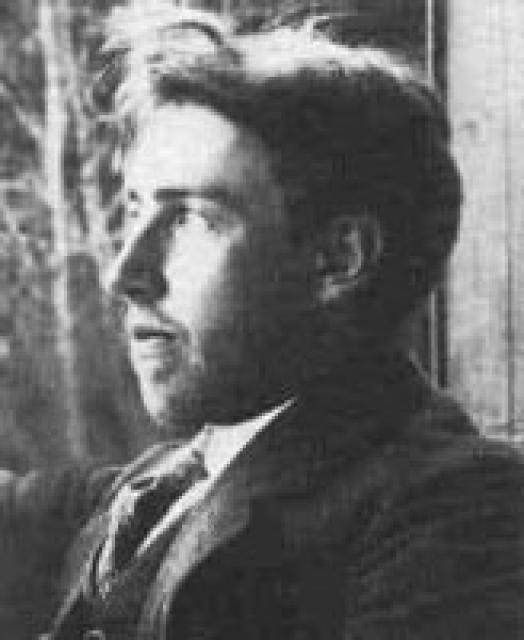
Early Life and Football CareerHarald Bohr was born on April 22, 1887, in Copenhagen, Denmark. He was the brother of the famous physicist Niels Bohr. In his early years, Harald excelled both in academics and athletics, particularly in football (soccer). He played as a midfielder for the Copenhagen-based club Akademisk Boldklub. In 1908, Harald was selected for the inaugural Danish national football team. He represented Denmark in four matches, including the first official international game played by the team.
Academic Career and Mathematical Contributions
After graduating from the University of Copenhagen in 1910 with a doctorate in mathematics, Harald Bohr dedicated his life to academic pursuits. He held professorial positions at the Copenhagen Polytechnic Institute (1915-1930) and the University of Copenhagen (1930-1956). From 1930 onward, he also served as the Director of the Mathematical Institute at the University of Copenhagen.
Harald Bohr's primary research focus was in the theory of functions. He made significant contributions to the study of Dirichlet series, including developing a method that combined arithmetical, geometrical, and theoretical-functional constructions. This work culminated in his formulation of the theory of almost periodic functions in 1924-1926.
In collaboration with the German mathematician Edmund Landau, Harald Bohr also investigated the distribution of zeros of the Riemann zeta-function. Their joint work led to the formulation of the Bohr-Landau theorem.
Recognition and Legacy
Harald Bohr's mathematical contributions earned him international recognition. He received honorary doctorates from several universities, including the University of Oslo, the University of Lund, and the University of Paris. Uniformly almost periodic functions are named after him in honor of his work.
WWII and Later Years
During the Nazi occupation of Denmark in World War II, Harald Bohr fled to Sweden for two years. After the war, he resumed his academic activities until his retirement in 1956. Harald Bohr passed away on January 22, 1951. His legacy as a brilliant mathematician and a pioneering figure in the study of almost periodic functions continues to inspire mathematicians worldwide.