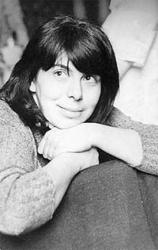
Haroldo De Campos
 Brazil
- Haroldo de Campos: A Multifaceted Literary Luminary
- Poetic Breakthroughs
- Avant-Garde Exploration
- Academic Pursuits
- Intellectual Collaborations
- Masterful Translations
- Literary Accolades
- Legacy and Influence
Haroldo de Campos: A Multifaceted Literary Luminary
Early Life and EducationHaroldo de Campos, born in São Paulo, Brazil, in 1929, pursued his education at the prestigious Colégio São Bento in Rio de Janeiro and the law school of the University of São Paulo.
Poetic Breakthroughs
Campos' literary career began with the publication of his first poetry collection in 1949. In 1956, he became a founding member of the "Concrete Poetry" movement, pushing the boundaries of language and form.
Avant-Garde Exploration
After 1963, Campos embarked on a unique path, blending epic and avant-garde sensibilities. His works explored the intricacies of language and embraced the practice of plurilingualism through extensive translation.
Academic Pursuits
Campos taught at the Catholic University of São Paulo and the University of Texas at Austin, sharing his profound knowledge of literature and translation.
Intellectual Collaborations
Throughout his career, Campos engaged in lively discussions and correspondence with renowned figures such as Karlheinz Stockhausen, Pierre Boulez, Marshall McLuhan, Roman Jakobson, Octavio Paz, Julio Cortázar, Umberto Eco, and Jacques Derrida.
Masterful Translations
Campos' translations spanned a wide range, including works from the Old Testament, Homer, Dante, Goethe, and Chinese and Japanese poetry. His 1962 theoretical manifesto, "Translation as Creation and Criticism," had a profound impact on the field.
Literary Accolades
Campos was the recipient of numerous awards, including seven Jabuti Prizes and the Octavio Paz Prize for Essay Writing. He was also honored with a Doctor of Letters from the University of Montreal.
Legacy and Influence
Haroldo de Campos left an indelible mark on contemporary Latin American literature. His avant-garde spirit, relentless exploration of language, and commitment to translation continue to inspire generations of literary artists.