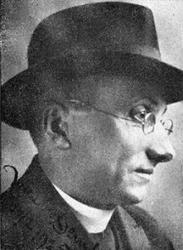
Harriette Arnow
 USA
USA- Harriette Arnow: An Expert on the People of the Southern Appalachians
- Early Life and Education
- Early Writing Career
- Life in Cincinnati and Detroit
- Success and Recognition
- Later Works and Legacy
Harriette Arnow: An Expert on the People of the Southern Appalachians
Harriette Arnow was an American writer known as an expert on the residents of the Southern Appalachians. Her extensive knowledge went beyond the established stereotypes of their lives.

Early Life and Education
Harriette Louise Simpson, later known as Harriette Arnow, was born on July 7, 1908, in Monticello, Wayne County, Kentucky. She grew up in Pulaski County, a neighboring county, as one of six children in a family of teachers who wanted her to follow in their footsteps. Harriette attended Berea College for two years before transferring to the University of Louisville. After completing her education, she spent two years teaching in the rural areas of Pulaski County, one of the most remote regions of the Appalachian Mountains, before moving to Cincinnati.

Early Writing Career
In 1935, Harriette published her first works in Esquire magazine. She wrote two stories, "A Mess of Pork" and "Marigolds and Mules," under a male pseudonym, using a photo of her son-in-law to conceal her gender. In 1936, she published her first novel, "Mountain Path," drawing from her experience as a teacher. However, at the publisher's suggestion, Arnow incorporated stereotypical elements about the Appalachian Indian tribe, such as the moonshine season and the hostility of the people. Her original work was a much more nuanced portrayal of the tribe's life.

Life in Cincinnati and Detroit
From 1934 to 1939, Harriette lived in Cincinnati and was involved in the Federal Writers' Project (FWP) of the United States Federal Government. It was during this time that she met her future husband, Harold Arnow, the son of Jewish immigrants. After a brief period in Pulaski County, where Harriette worked as a teacher again, the couple settled in a housing complex in Detroit in 1944.
Success and Recognition
Harriette's novel "Hunter's Horn," published in 1949, became a bestseller and received significant critical acclaim. It was considered on par with William Faulkner's "A Fable," earning her widespread recognition and almost earning her a Pulitzer Prize. In 1950, the couple moved to Ann Arbor, Michigan, where Harriette released her most famous work, "The Dollmaker," in 1954. The novel tells the story of a poor Kentucky family forced to move to Detroit due to economic hardships. It not only reflects Arnow's own experiences but also the experiences of many Appalachians who left their homes in search of a better life in the industrialized North. The narrative is told through the eyes of Gertie Nevels, a woman "extracted" from the forests and farmlands to join her husband, a factory worker during World War II. When the novel was labeled as "feminist fiction," Arnow disputed this characterization, insisting that her work, "The Dollmaker," was about the struggle of an individual woman trying to survive in a harsh and ever-changing world.
Later Works and Legacy
Harriette Arnow's later works included historical research such as "Seedtime on the Cumberland" and "Flowering of the Cumberland." She published "The Weedkiller's Daughter" in 1970, "The Kentucky Trace" in 1974, and "Old Burnside" in 1977. Arnow passed away on March 22, 1986, on her farm in Wexford County, Michigan. The publishing division of the Michigan State University released Arnow's unpublished second novel, "Between the Flowers," in 1999, as well as a collection of her short stories in 2005.