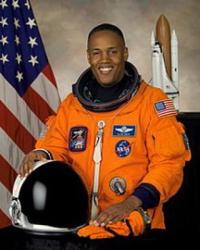
Harrison Schmitt
 USA
USAHarrison Schmitt: American Geologist, Retired Astronaut, and Former Senator

Harrison Hagan "Jack" Schmitt was an American geologist, retired astronaut, university professor, and former United States Senator from New Mexico. He was born in Santa Rita, New Mexico, and grew up in nearby Silver City. Schmitt completed his high school education in 1953 and earned a degree in geology from the California Institute of Technology in 1957. He then studied geology at the University of Oslo in Norway for a year. In 1964, Schmitt obtained a Ph.D. in geology from Harvard University.

Astronaut Career
Prior to joining NASA as the first member of the group of scientist-astronauts in June 1965, Schmitt worked at the Astrogeology Center of the United States Geological Survey in Flagstaff, Arizona. He developed field methods for geological surveys that would be used by the Apollo missions. After going through a pre-flight training program for Air Force pilots, Schmitt became a jet pilot before returning to the astronaut corps in Houston. He played a key role in preparing the Apollo crew for conducting geological investigations. Schmitt participated in the examination and assessment of all the samples collected during the moon landings and assisted the crew members with the scientific aspects reflected in their reports.

Apollo 17 Mission
In August 1971, Schmitt replaced Joe Engle and was assigned as part of the crew responsible for the last Apollo mission, Apollo 17, which marked the sixth lunar landing. He landed on the moon with Commander Eugene Cernan in December 1972. As the only geologist among the astronauts, Schmitt collected a sample of rock, known as Troctolite 76535, which was later described as the "most interesting sample returned from the moon". They also obtained evidence that the moon once had an active magnetic field. Schmitt returned to the lunar module before Cernan, making him the second-to-last person to walk on the moon.

Political Career
Following the Apollo 17 mission, Schmitt played a significant role in documenting the results of the geological investigations. In August 1975, he resigned from NASA to run as a Republican candidate for the United States Senate from New Mexico in the 1976 elections. Schmitt won with 57% of the votes against Democrat Joseph Montoya. He served one term in the Senate and held a prominent position in the Subcommittee on Science, Technology, and Space. Schmitt sought re-election in 1982 but was defeated by Democrat Jeff Bingaman.
Later Career and Views
After leaving politics, Schmitt worked as a consultant in various fields, including business, geology, space, and government policy. He became an adjunct professor of engineering physics at the University of Wisconsin–Madison. Schmitt has been a proponent of utilizing lunar resources and proposed the "Interlune InterMars Initiative" in 1997, which focused on acquiring private sector involvement and utilizing lunar helium-3 as fuel for nuclear reactors.
Schmitt served as the chairman of the NASA Advisory Council from November 2005 until his sudden resignation in October 2008. He left the Planetary Society in November 2008. In January 2011, Schmitt was appointed as the Secretary of Energy, Minerals, and Natural Resources Department of New Mexico by Governor Susana Martinez. However, he lost his position the following month after refusing to cooperate with the data verification process for employment documents.
Schmitt's views on global climate change diverge from the prevailing scientific thought. He believes that the risks associated with climate change are overestimated and suggests that climate variations are used as a tool to expand government control. These views led to his departure from the Planetary Society. Schmitt has expressed that the increase of carbon dioxide in the atmosphere has no significant link to global warming and has attributed the "demonization" of natural atmospheric processes to proponents of government energy production regulations.
Schmitt appeared in the 2007 documentary film "In the Shadow of the Moon" and contributed to the book "NASA's Scientist-Astronauts" by David Shayler and Colin Burgess.