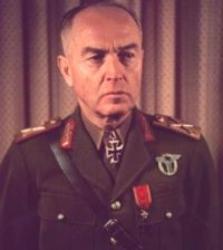
Harry Lloyd Hopkins
 USA
USA- Biography of Harry Lloyd Hopkins
- Early Life and Education
- Early Career
- Meeting Franklin D. Roosevelt
- Role in Diplomacy and World War II
- Close Relationship with Roosevelt
- Personal Diplomacy
- Relationship with Winston Churchill and Joseph Stalin
- Contributions to Allied Conferences
- Later Years and Legacy
Biography of Harry Lloyd Hopkins
Harry Lloyd Hopkins was an American statesman and diplomat. He served as a special advisor and assistant to President Franklin D. Roosevelt from 1941 to 1945. Hopkins was a participant in the Quebec Conference (1943), the Cairo Conference (1943), and was a member of the US delegations at the Tehran Conference (1943) and the Yalta Conference (1945). Winston Churchill once named him as one of the two Americans, aside from the President, whose contribution to the defeat of Nazi Germany was most significant.

Early Life and Education
Harry Lloyd Hopkins was born on August 17, 1890, in Sioux City, Iowa. He was the fourth of five children of David Eldon Hopkins and Anna Picket Hopkins. His father worked various jobs and often moved from place to place. Harry excelled in school and attended Grinnell College. In his free time, he played baseball, a sport he remained a fan of throughout his life.
Early Career
When the United States entered World War I in 1917, Hopkins tried to enlist in the army or navy, but he was rejected due to health reasons. He later became the head of all Red Cross organizations in the southeastern states, based in Atlanta. In 1921, Hopkins returned to New York, where he worked for the Association for Improving the Condition of the Poor and then as the executive director of the New York Tuberculosis Association.
Meeting Franklin D. Roosevelt
Hopkins first met Franklin D. Roosevelt during the 1928 election campaign when Roosevelt was running for governor. This encounter had a profound impact on Harry. For the next 12 years, he worked closely with Roosevelt, forming a strong bond.
Role in Diplomacy and World War II
Before 1940, Hopkins had no diplomatic experience. He formed a close relationship with Roosevelt through their work in various charitable organizations. In 1933, he became the director of the Federal Emergency Relief Administration, and five years later, he was appointed as the Secretary of Commerce. His talent as a diplomat became evident during World War II. Hopkins recognized the threat posed by German fascism to America and played a crucial role in shaping the foreign policy of the United States during this period.
Close Relationship with Roosevelt
Hopkins was practically a member of Roosevelt's family, living in the White House for months at a time. After the death of his second wife, Eleanor Roosevelt took care of his daughter. When Hopkins married for the third time in 1942, the ceremony took place in the presidential residence, with Roosevelt in attendance. While seen as a bon vivant and a regular visitor to nightclubs in Washington, Hopkins lived modestly and was known for his loyalty and unwavering dedication to the President. Roosevelt called him an "excellent ambassador working toward my goals" and introduced him to foreign leaders as someone to be trusted as much as himself.
Personal Diplomacy
Hopkins believed that in times of war, the President should act as the country's chief diplomat and worked to ensure that Roosevelt had the necessary support and resources to fulfill this role. He played a significant role in the administration of the Lend-Lease program and acted as a de facto Secretary of State in various negotiations. He championed the practice of personal diplomacy, allowing him to negotiate on issues that would have been difficult for official diplomats to address.
Relationship with Winston Churchill and Joseph Stalin
Hopkins developed a close relationship with British Prime Minister Winston Churchill during his visit to London in January 1941. Their almost daily conversations over six weeks laid the foundation for a lasting friendship. Churchill referred to Hopkins as an "extraordinary man" who played a significant and sometimes decisive role in the course of the war. Hopkins also established a strong rapport with Soviet leader Joseph Stalin during his visit to Moscow in July 1941. He believed in the potential for close collaboration with the Soviet Union as an essential part of the anti-fascist alliance.
Contributions to Allied Conferences
Hopkins was an essential participant in the major Allied conferences during the war. He played a key role in shaping the outcome of the conferences and ensuring that the US had a moderate position. His efforts to bridge the growing gaps between Roosevelt, Churchill, and Stalin were crucial. Despite some disagreements, the conferences resulted in important decisions and strategies for the defeat of Nazi Germany.
Later Years and Legacy
Hopkins' health deteriorated in early 1944, and he was bedridden for several months. He returned to active duty in the summer but never fully regained his previous energy. After Roosevelt's death in April 1945, Hopkins continued his diplomatic work as an emissary for President Harry S. Truman. His last visit to the USSR took place in May-June 1945, where he focused on post-war European settlement issues. Hopkins retired from government service on July 2, 1945.
Harry Lloyd Hopkins passed away on January 29, 1946, at the age of 55. His diplomatic missions and personal relationships made significant contributions to American foreign policy during World War II. He was remembered as a skilled statesman and diplomat who played a vital role in shaping the outcome of the war.