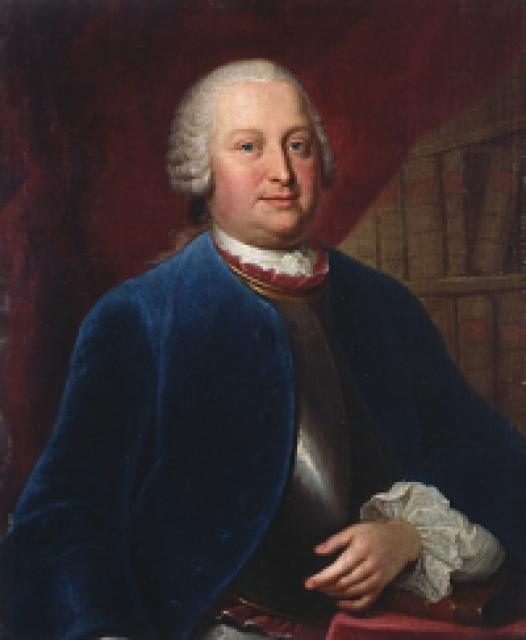
Heinrich Bruhl
 Germany
- Childhood and Early Career
- Rise to Prominence
- Favoritism and Influence
- Extravagance and Corruption
- Catholicism and Polish Ambitions
- War and Decline
- Final Days and Legacy
Childhood and Early Career
Born into a noble family in Saxony, Heinrich von Brühl's father served as court marshal to the Duke of Saxe-Weissenfels. At a young age, Brühl entered the service of Duchess Elisabeth, widow of Duke Johann Georg, gaining favor with both the Duchess and King August II of Poland and Saxony.
Rise to Prominence
In 1720, Brühl became a page to King August II and later a chamberlain, accompanying the king on his travels. His influence grew under August II and continued under his successor, August III, who appointed Brühl as his First Minister in 1738. Brühl held the prestigious position of General of Royal Artillery in 1752.
Favoritism and Influence
Brühl's close relationship with August III allowed him to secure high-ranking government positions and increased taxes to support the lavish royal court. Through his marriage to Countess Maria Anna von Kolowrat, Brühl further strengthened his position and eliminated his rival, Count Sulkowski.
Extravagance and Corruption
Known for his lavish lifestyle, Brühl held numerous offices, amassed a vast fortune, and constructed the grand Brühl's Terrace in Dresden. His wasteful spending and corrupt practices contributed to the country's crippling debt.
Catholicism and Polish Ambitions
After converting to Catholicism, Brühl acquired estates and held high offices in Poland, tracing his lineage to a Polish count. He conspired to isolate Prussia, but his efforts were thwarted by the Seven Years' War.
War and Decline
Despite Brühl's extravagant spending, Saxony could only muster a small army at the outbreak of the Seven Years' War. The army was forced to surrender under the weight of hardships and incompetent leadership. Brühl and the king fled to Warsaw, remaining there until the signing of the Treaty of Hubertusburg.
Final Days and Legacy
Upon their return to Dresden, both the king and Brühl passed away. Brühl's estates were confiscated, but later returned to his sons. His opulent Brühl's Palace became a venue for lavish festivities, and his extensive library became part of the Royal Library of Dresden. Despite his extravagant lifestyle and corruption, Brühl also left behind a legacy of architectural beauty and cultural patronage.