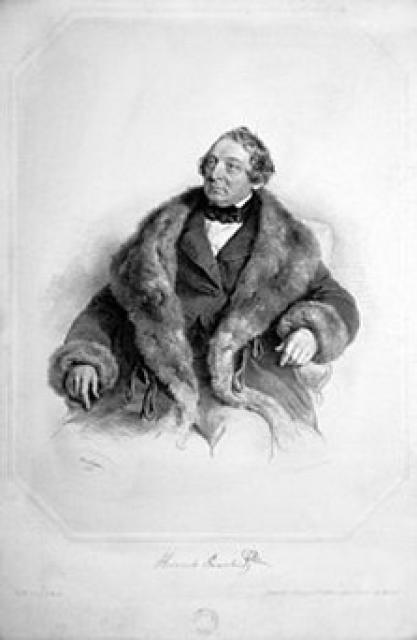
Heinrich Johann Immanuel Anschutz
 Germany
- Early Life and Education
- Introduction to Theater
- Theatrical Debut and Career
- Specialized Roles and Accolades
- Personal Life and Family
- Death and Legacy
Early Life and Education
Heinrich Johann Immanuel Anschütz was born in Grimma, Saxony, into the family of a local orphanage director. He received his early and secondary education at the prestigious St. Augustin Gymnasium, where he excelled in his studies.
Introduction to Theater
Despite plans to pursue a legal career, Anschütz's love for the theater took precedence. He frequented local theaters and was drawn to the works of famous playwrights such as Johann Wolfgang von Goethe.
Theatrical Debut and Career
In 1807, Anschütz made his theatrical debut in Nuremberg as Adolf von Klingberg in August von Kotzebue's "Die beiden Klingsberg." His talent and vocal abilities soon garnered attention, leading to roles in Königsberg and Vienna's Hofburgtheater in 1811 and 1822 respectively.
Specialized Roles and Accolades
Anschütz excelled in both character and heroic roles. His prowess as a declaimer and his clear, well-trained voice enhanced his performances, earning him critical acclaim.
Personal Life and Family
Anschütz married twice, first to the popular singer Josefine Anschütz and then to Emilie Butenop, who also enjoyed success on the stage. His first wife's daughter, Malvina, became an actress, while his son Alexander was an opera baritone and music teacher. Another son, Roderick, became a renowned lawyer, philosopher, and playwright, while his brother pursued acting before transitioning to writing.
Death and Legacy
Heinrich Johann Immanuel Anschütz passed away in Vienna on December 29, 1865, at the age of eighty. His impact on the German-language stage was profound, as he is considered one of the pioneers of scenic realism and the founder of the renowned Anschütz acting dynasty.