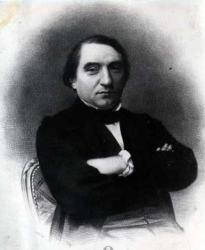
Heinrich Rickert
 Germany
- Biography of Heinrich Rickert
- Philosophical Evolution
- Contributions to Neo-Kantianism
- Key Works
- The Concept of Culture
- The Theory of Values
- Philosophy of Culture
- Legacy
Biography of Heinrich Rickert
Heinrich Rickert was a German philosopher and one of the founders of the Baden School of Neo-Kantianism. He was born in 1863 and became a professor at the University of Freiburg in 1894. Later, in 1916, he joined the University of Heidelberg.
Philosophical Evolution
Rickert's philosophical position underwent a complex evolution throughout his life. Initially, he analyzed epistemological problems such as the object of knowledge and the classification of sciences. Later, he developed a system of philosophy as a theory of values. Towards the end of his life, he aimed to establish ontology and metaphysics.
Contributions to Neo-Kantianism
Rickert systematized the teachings of the neo-Kantians, particularly Wilhelm Windelband. He elevated value to the status of a universal system-building category. According to Rickert, anything that cannot be attributed to values is meaningless. He emphasized the distinction between law and value, asserting that law reflects something typical, while value is always associated with something unique. Many philosophers, except Kant, made the mistake of not differentiating between these concepts. Rickert drew inspiration from philosophers like Richard Avenarius (a positivist) and Karl Marx.
Key Works
Rickert's two foundational works are "The Sciences of Nature and the Sciences of Culture" (originally a small brochure in 1899, later expanded into a book in 1910) and "The Philosophy of History" (1905). In the first work, he provided a definition of value that none of the neo-Kantians had previously given. He stated that value is a spiritual goal, a practical life attitude that expresses the living nerve of culture, its essential meaning, and reflects the dynamics of culture. Culture, for Rickert, refers to the process of realizing universal social values throughout historical development.
The Concept of Culture
Rickert classified all phenomena of existence into two categories: phenomena associated with values (goods) and phenomena unrelated to values (value-neutral). Goods, as the embodiment of values, constitute culture, not everything created by humans. Culture is a collection of objects related to universally significant values and nurtured for the sake of these values. If an object of culture loses all value, it becomes part of nature. Rickert's rationalistic philosophy, which connects everything with knowledge, encompasses all objects of the sciences of religion, jurisprudence, history, philology, and political economy, which later came to be known as the humanities. However, he made an exception for psychology and technical inventions, as they are not related to the sciences of the spirit. According to Rickert, psychology examines the life of the soul as nature, which is value-neutral. Therefore, he distinguishes between two types of sciences: the sciences of nature, which study value-neutral phenomena, and the sciences of culture, which employ an individualizing or historical method to understand unique and particular cultural goods that always carry values. "It is precisely this concept of culture that enables history as a science."
The Theory of Values
Rickert formulates a method for determining whether goods are related to values. While natural sciences establish regular, repetitive, and typical connections, sciences of the spirit must study unique, non-repeatable historical phenomena. Historical sciences of culture divide reality (specifically, individual reality) into two types: historically significant individuals and simply diverse beings, the essential and the nonessential. For example, among a multitude of chairs, Voltaire's chair in a museum stands out with its value. Without this relationship to values, there would be no historical sciences at all.
Philosophy of Culture
For Rickert, philosophy as a science of values is essentially a philosophy of culture. When the philosophy of culture emerged in the early 20th century, it initially focused on the values of culture. Without an ideal above himself, a person cannot live correctly in a spiritual sense. The values that constitute this ideal are revealed in history, and as culture progresses, these values, like stars in the sky, enter into the horizon of humanity one by one. They are not old values or new values; they are simply values.
Legacy
The neo-Kantians laid the foundations for Western value philosophy in general and the philosophy of culture in particular. Their merit lies in making cultural problems central to the sciences, which later came to be known as the humanities. From their perspective, history can only be a science of culture since its object is associated with values. History does not merely study something, but rather what has the highest significance for the entire history of humanity. The international significance of a nation's culture is realized when it expresses its internal values. Repeating what others have done is of no interest. The neo-Kantians brought meaningful values into the humanities. However, they did not fully develop the theory of values, nor did they explain why value is the core of culture. This task was undertaken by further developments in axiology.