Heinrich Tietze
 Austria
- Heinrich Tietze: A Renowned Austrian Mathematician
- Early Life and Education
- Academic and Military Career
- Mathematical Contributions
- Tietze's Extension Theorem
- Tietze's Convexity Theorem
- Other Notable Contributions
- Legacy
Heinrich Tietze: A Renowned Austrian Mathematician
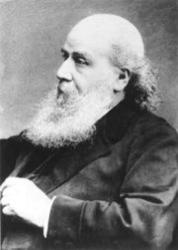
Heinrich Tietze (1880-1964) was a celebrated Austrian mathematician recognized for his pivotal contributions to topology and group theory.
Early Life and Education
Heinrich Tietze was born in Schleinitz, Austria-Hungary, on August 1, 1880. His father, Emil Tietze, and grandfather, Franz Ritter von Hauer, were renowned Austrian geologists. After graduating high school, Tietze pursued mathematics at the Technical School in Vienna from 1898. He furthered his studies in Munich before returning to Vienna, where he obtained his Ph.D. in 1904 and his habilitation in 1908.
Academic and Military Career
From 1910 to 1918, Tietze held a teaching position in mathematics at the Brno University of Technology. In 1913, he was appointed as an associate professor. He served in the Austrian army during World War I before resuming his academic career at Brno. In 1919, he accepted a professorship at the University of Erlangen-Nuremberg. In 1925, he moved once more to Ludwig Maximilian University of Munich, where he remained until his retirement in 1950. He passed away in Munich on March 17, 1964.
Mathematical Contributions
Heinrich Tietze made groundbreaking discoveries that profoundly influenced mathematical research:
Tietze's Extension Theorem
Tietze's Extension Theorem, published in 1912, is a fundamental result in topology. It states that any continuous function defined on a closed subset of a normal topological space can be extended to the entire space while preserving continuity.
Tietze's Convexity Theorem
Tietze's Convexity Theorem, published in 1913, is a pivotal theorem in geometry. It asserts that every compact convex subset of a Euclidean space is homeomorphic to a convex polytope.
Other Notable Contributions
In addition to his groundbreaking theorems, Tietze also devised the Tietze transformations for functions and introduced the Tietze problem on group isomorphisms. His mathematical contributions continue to be central to research in topology, group theory, and related areas.
Legacy
Heinrich Tietze's legacy extends far beyond his mathematical contributions. He mentored generations of students and influenced the development of modern mathematics. In his honor, the Tietze graph is named after him, describing the boundaries of a partition of the Mobius strip into six mutually adjacent regions, which he discovered as part of his work generalizing the Four Color Theorem to non-orientable surfaces. Tietze's work continues to inspire and guide mathematicians to this day, solidifying his place as one of the most notable figures in mathematical history.