Heinz Brandt
 Germany
- Early Life and Military Career
- Olympic Triumph and Military Service
- Unwitting Involvement in the Valkyrie Plot
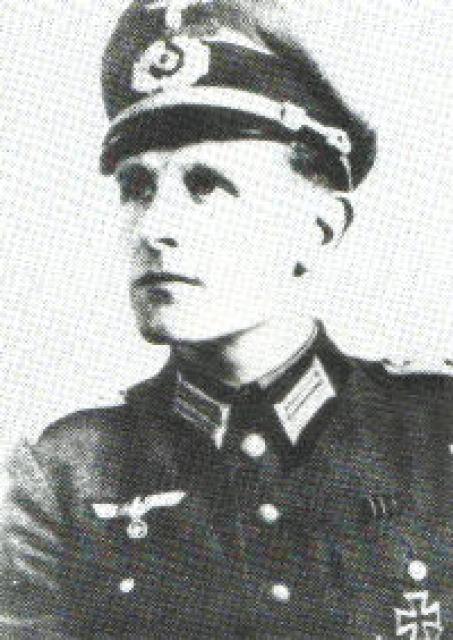
Heinz Brandt: The Horseman, Soldier, and Unwitting Participant in the Valkyrie Plot
Heinz Brandt was a German staff officer during World War II who rose to Olympic glory as the equestrian team captain in the 1936 Berlin Games. His life took a fateful turn when he became embroiled in the plot to assassinate Hitler.
Early Life and Military Career
Heinz Brandt was born on March 11, 1907, in the Charlottenburg district of Berlin. He enlisted as a cadet in the 13th Cavalry Regiment in 1925 and quickly advanced through the ranks, becoming a sergeant in 1926. After completing his training at the Infantry and Cavalry Schools, he became a lieutenant in 1928. Brandt's exceptional horsemanship led him to serve as an instructor at the Cavalry School in Hanover from 1930 to 1931. He was then transferred to the 2nd Cavalry Regiment, where he served until 1939.
Olympic Triumph and Military Service
In the lead-up to the 1936 Summer Olympics in Berlin, Brandt was selected to participate in the equestrian team competition. Training with his horse Alkmene, he emerged as the team captain and led Germany to the gold medal. After the Games, he was briefly assigned to the War Academy and subsequently to the 25th Infantry Division.
In 1939, Brandt was transferred to the General Staff, where he served until 1940. He was then appointed a staff officer in the Operations Division of the General Staff with the 297th Infantry Division. Brandt's exemplary service earned him promotions to major in 1941, lieutenant colonel in 1942, and colonel in 1943.
Unwitting Involvement in the Valkyrie Plot
Brandt's life took a tragic turn when he unknowingly became a key figure in the Valkyrie Plot, a conspiracy to assassinate Hitler. On March 13, 1943, Brandt carried a briefcase containing a bomb onto Hitler's plane, which was concealed as bottles of cognac. The bomb failed to detonate during the flight.
According to one account, Brandt inadvertently saved Hitler's life by moving the briefcase away from its original position near Hitler. As Brandt attempted to move closer to a map, he kicked the briefcase, which was later determined to be the one planted by Colonel Claus von Stauffenberg. The resulting explosion tore off Brandt's leg, and he died the following day. Hitler posthumously promoted him to major general.
Brandt's role in the Valkyrie Plot was depicted in the 2008 film "Valkyrie," where he was portrayed by actor Tom Hollander. His legacy remains a reminder of the intertwined threads of bravery, duty, and the unexpected turns of fate that can shape history.