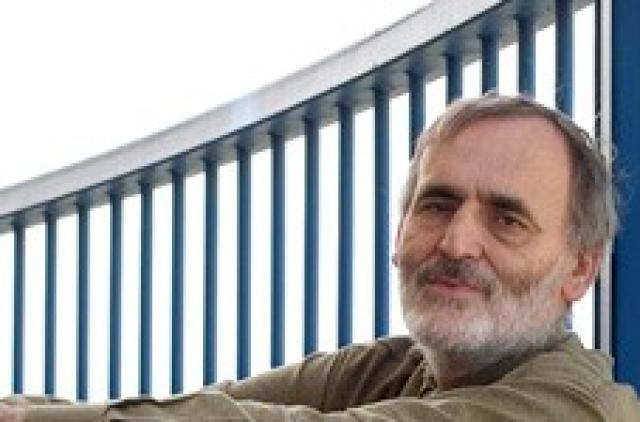
Helmut Lachenmann
 Germany
Biography of Helmut Lachenmann
Helmut Lachenmann is a German composer known for his creation of the so-called 'musique concrète instrumentale' or 'concrete instrumental music'. He was born on November 27, 1935, in Stuttgart, Germany. At the end of World War II, when Helmut was just 11 years old, he began singing in a local church choir. Showing a strong inclination towards music from an early age, he started composing music as a teenager.

From 1955 to 1958, Lachenmann studied at the Musikhochschule Stuttgart, where he focused on piano under the guidance of Jürgen Uhde and composition under Johann Nepomuk David. He then continued his studies in Venice from 1958 to 1960, becoming the first student of Italian composer Luigi Nono.

In 1965, Lachenmann briefly explored electronic music but soon decided to dedicate himself entirely to instrumental music. He coined the term 'concrete instrumental music' to describe his unique compositional style. Using traditional musical instruments, he attempts to reflect the entire world of sounds, employing unconventional playing techniques. In his music, the sounds are always structured in a way that the means by which they are produced are just as important as their actual sound. As a result, qualities such as strength and timbre describe or signify specific situations. When listening, one imagines the conditions in which the sounds and noises emerge, perceiving the materials and energy involved.

Lachenmann's compositions demand incredible effort from musicians due to the multitude of techniques he invented for wind, brass, and string instruments. Among his most significant works are the opera 'Das Mädchen mit den Schwefelhölzern' (The Little Match Girl), orchestral pieces such as 'Schwankungen am Rand' (Fluctuations at the Edge) for eight brass instruments, two electric guitars, two pianos, four thundering paper sheets, and 34 strings; 'Accanto' for clarinet, orchestra, and tape; 'NUN' for flute, trombone, male choir, and orchestra; as well as ensemble works like 'Movement', '...zwei Gefühle...' (Two Feelings), and 'Music mit Leonardo'.

In addition to his compositional output, Lachenmann regularly gave lectures at the Internationale Ferienkurse für Neue Musik (International Summer Courses for New Music). From 1976 to 1981, he taught composition at the Musikhochschule Hannover, and from 1981 to 1999, he held the same position at the Musikhochschule Stuttgart. He is also known for his articles and essays, many of which are included in the book 'Musik als existentielle Erfahrung' (Music as an Existential Experience).
In 1998, Helmut Lachenmann was invited by Walter Fink to participate in the Rheingau Musik Festival. In the spring of 2008, he became a visiting professor at the music department of Harvard University.


