Henri Desire Landru
 France
Biography of Henri Desire Landru
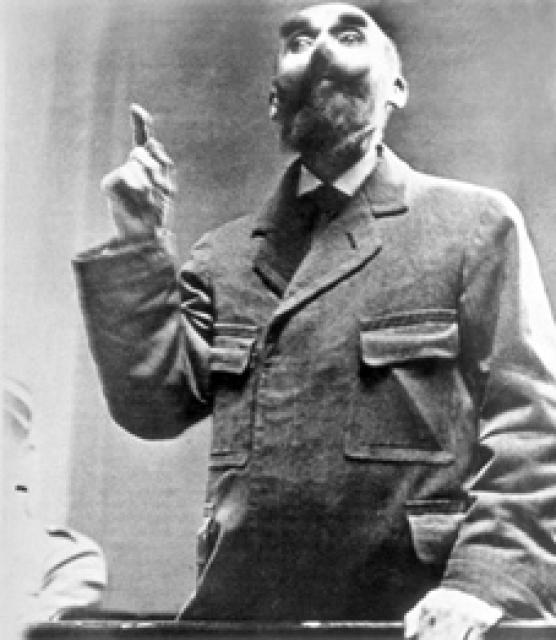
Henri Desire Landru was a French serial killer who was born on April 12, 1869, in Paris. After finishing school, he spent four years in the army from 1898 to 1891. Following his military service, Landru resumed his sexual relationship with his cousin who later gave birth to his daughter. However, Landru refused to marry her and instead married another woman two years later, with whom he had four children.

Landru's criminal activities began when he was deceived by an employer who took his money. He then resorted to fraud and became involved in various schemes targeting elderly widows. In 1900, he was sentenced to two years in prison for his crimes. However, this was not the last time Landru would be involved in fraudulent activities.

By 1914, Landru was living separately from his wife and working as a second-hand furniture dealer. He began placing advertisements in the "Lonely Hearts" section of Parisian newspapers, using a template that described him as a widower with sufficient income and a desire to marry a widow from respectable circles. During World War I, many men lost their lives in the trenches, leaving behind widows who became Landru's victims.
He would lure women who agreed to visit his Parisian villa, and after gaining access to their assets, he would kill and burn their dismembered bodies in his oven. Between 1914 and 1918, Landru claimed to have murdered 11 people, including 10 women and one teenage son of one of his victims. He used various pseudonyms, and the bodies of the missing women were never found, perplexing the police. In fact, Landru used so many aliases that he had to keep a ledger documenting the different identities he used for each woman he corresponded with.
In 1919, Madame Buisson, the sister of one of Landru's victims, attempted to locate her missing relative. She did not know Landru's real name but was able to identify him and point out his residence, ultimately convincing the police to arrest him. Initially, Landru was charged only with embezzlement, as he refused to speak with the police who conducted searches in his garden where no bodies were found. It seemed that there was insufficient evidence to charge him with murder. However, fragments of paper listing the missing women were discovered, and when combined with other documents, provided enough evidence to convict Landru of murder.
In November 1921, Landru stood trial on 11 counts of murder, and he was found guilty on all counts and sentenced to death. Three months later, in Versailles, the sentence was carried out by guillotine. During the trial, Landru made a drawing of his kitchen, including his oven where he burned his victims. In December 1976, the drawing was made public.
Landru served as inspiration for Charlie Chaplin's film "Monsieur Verdoux" in 1947. The original screenplay was written by Orson Welles, who intended to direct the film with Chaplin in the lead role. However, Chaplin insisted on directing the film himself, resulting in him buying the screenplay from Welles and making some changes. Although "Monsieur Verdoux" received critical acclaim and even won an Oscar, it performed poorly at the American box office.
In 2001, French journalist and satirist Frederic Pages, using the pseudonym Jean-Baptiste Botul, published a book titled "Landru: Precursor of Feminism," which explored Landru's crimes and their impact.
The severed head of Henri Desire Landru is exhibited in the Museum of Death in Hollywood, California.