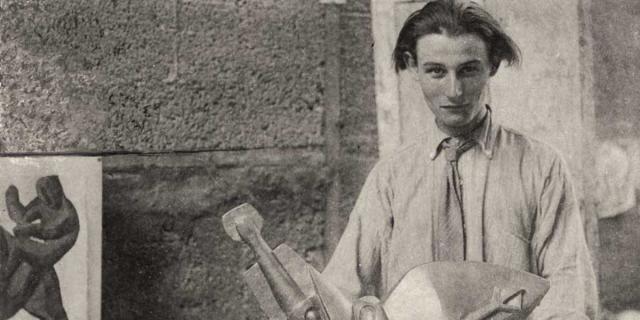
Henri Gaudier-Brzeska
 France
- Early Life and Artistic Formation
- Influences and Artistic Style
- Vorticism and Collaborations
- Personal Life and Symbolism
- War and Sacrifice
- Artistic Legacy and Recognition
- Cinematic Remembrance
Early Life and Artistic Formation
Henri Gaudier-Brzeska, born near Orléans, embarked on his artistic journey in 1910 when he relocated to London. Despite lacking formal training, he proclaimed himself a "free artist."
Influences and Artistic Style
Gaudier-Brzeska's early work was heavily influenced by Auguste Rodin and primitive sculptures from the British Museum. He developed a distinctive artistic style that eschewed the polished and refined finishes of classical masters, instead embracing the rough and dynamic traces of his chisel.
Vorticism and Collaborations
Through connections with Percy W. Lewis and Ezra Pound, Gaudier-Brzeska became a founding member of Vorticism, a British art movement known for its angular and fragmented forms.
Personal Life and Symbolism
Gaudier-Brzeska's deep connection with Polish writer Sophie Brzeska was reflected in his adoption of her surname, despite them never marrying. Brzeska's subsequent death in a psychiatric hospital following Gaudier-Brzeska's passing became a poignant symbol of their bond.
War and Sacrifice
In 1914, Gaudier-Brzeska joined the French army as a volunteer. He was killed in action in Flanders during the First World War. He was posthumously awarded the French Croix de Guerre for bravery.
Artistic Legacy and Recognition
Despite his tragically short career, Gaudier-Brzeska left a lasting impact on 20th-century French and English sculpture. His works are featured in the Musée National d'Art Moderne in Paris and the Tate Gallery in London.
Cinematic Remembrance
In 1972, Ken Russell's film "Savage Messiah" immortalized Gaudier-Brzeska's life and work on the silver screen, cementing his legacy as an influential figure in the art world.


