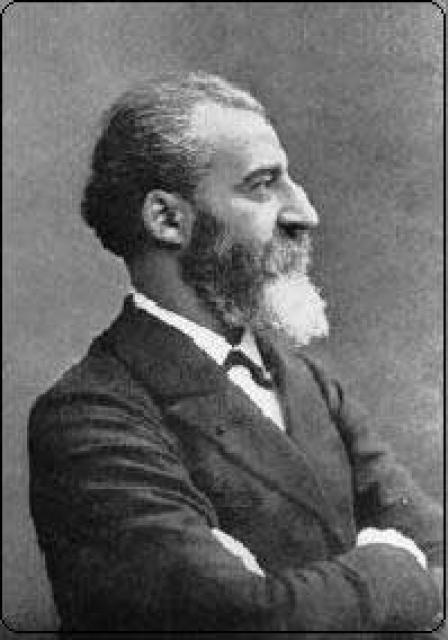
Henri Moissan
 France
Biography of Henri Moissan
Henri Moissan was a French chemist who was awarded the Nobel Prize in Chemistry in 1906. He was born into a family with modest means, his father being a railway employee and his mother a seamstress. When the Moissan family moved to Meaux in 1864, Henri enrolled in the municipal high school. It was there that he encountered a talented teacher of mathematics and natural sciences who sparked his interest in chemistry. Moissan became so focused on studying chemistry that he neglected other subjects, resulting in his rejection from university upon graduating from high school in 1870.
After two years of serving as an assistant pharmacist, Moissan began working at the Museum of Natural History under the guidance of chemist Edmond Frémy. In 1874, he joined the laboratory of Pierre Paul Dehérain at the École Supérieure de Pharmacie, where he studied plant physiology. Dehérain convinced him to pursue further education, and Moissan enrolled in the University of Paris, earning his bachelor's degree in 1874 and his master's degree three years later. In 1880, he obtained his doctorate in inorganic chemistry for his work on chromium oxides.
To support himself, Moissan briefly managed an industrial laboratory, and from 1879 to 1883, he worked as an assistant lecturer at the Higher School of Pharmacy in Paris, where he conducted laboratory classes. In 1886, Moissan was appointed professor of toxicology at the Higher School of Pharmacy, and three years later, he became a professor of inorganic chemistry. In 1900, he became a professor at the Sorbonne.
Discovering Fluorine
With financial support from his wife's family, Moissan was able to dedicate himself entirely to the problem of obtaining fluorine. Previous attempts to isolate free fluorine by electrolysis of molten fluorine compounds had failed due to the high temperatures required, which caused the released fluorine to react with water, the reaction vessel, and the electrodes. Moissan managed to isolate free fluorine on June 26, 1886, using anhydrous potassium fluoride dissolved in anhydrous hydrofluoric acid as the electrolyte, platinum-iridium electrodes, and a platinum apparatus. However, when it came time to demonstrate his discovery to members of the Paris Academy of Sciences, Moissan failed to obtain fluorine as the current did not pass through the hydrofluoric acid. He had overprepared the acid and had to add potassium fluoride to make the experiment reproducible, which happened the next day.
Due to the technical difficulties involved in obtaining fluorine at high temperatures, Moissan investigated the chemical properties of fluorine at very low temperatures. Alongside English chemist James Dewar, he obtained liquid fluorine at -185°C, which still reacted with hydrogen and hydrocarbons even at that temperature. He also studied the compounds of fluorine with metals such as platinum, alkali-earth metals, silver, and manganese, as well as nonmetals, resulting in the discovery of iodopentafluoride and nitryl fluoride. This work was hazardous, as fluorine compounds are highly toxic. Moissan later remarked, "Fluorine took away ten years of my life."
Other Contributions
Although Moissan's attempts to produce diamonds from fluorocarbons were unsuccessful, his analytical work on diamonds revealed the presence of iron impurities. It was known that iron dissolves carbon and that diamonds form under conditions of high temperature and pressure. Therefore, Moissan tried to produce diamonds by subjecting carbon-saturated molten iron to high pressure and then rapidly cooling it in water. The iron, saturated with carbon, expanded inside the resulting iron shell, creating high internal pressure. While he did not succeed in producing diamonds, Moissan's developed technology had significant practical value. To achieve extremely high temperatures, he constructed an electric arc furnace capable of reaching temperatures up to 3500°C.
Using his electric furnace, Moissan studied the melting and vaporization conditions of metals that were thought not to transition into the gaseous state, such as zirconium, molybdenum, manganese, chromium, thorium, tungsten, platinum, uranium, titanium, and vanadium. He successfully obtained pure molybdenum in 1895 and pure tungsten in 1897. Moissan also discovered that at very high temperatures, carbon, boron, and silicon, which are unreactive at normal temperatures, react with many elements to form carbides, borides, and silicides, respectively. He also synthesized silicon carbide (carborundum) and some hydrides. Additionally, Moissan developed a technology for obtaining pure boron.
Nobel Prize and Legacy
Moissan's nomination for the Nobel Prize began in 1901 and continued until he was finally awarded the prize in 1906 "for his large volume of work, including the isolation of the element fluorine and the introduction of the electric furnace named after him into laboratory and industrial practice." Due to his deteriorating health, Moissan did not give a Nobel lecture and passed away two months after receiving the prize.
Beyond his scientific pursuits, Moissan had a wide range of interests. He enjoyed art and even wrote a play during his student years. He collected paintings, engravings, and autographs, particularly those from the era of the French Revolution, and had a passion for traveling. Despite his busy experimental schedule, he managed to write a five-volume course on mineral chemistry (1904–1906).
Moissan underwent surgery on February 16, 1907, after suffering a severe appendicitis attack. Chronic heart failure and years of working with toxic chemicals had weakened his body, and he passed away four days later in Paris at the age of 54.
Selected Works: Some types of new reflective furnaces with movable electrodes, St. Petersburg, 1896; Electric Fluorine, Paris, 1897; Fluorine and Its Compounds, Paris, 1900; Mineral Chemistry and Its Relations with Other Sciences, Paris, 1904; Treatise on Mineral Chemistry, Paris, 1904–1906.


