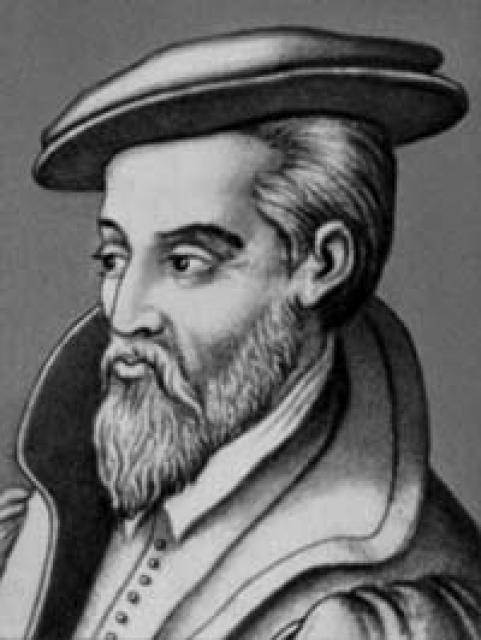
Georgius Agricola
 Germany
- Georgius Agricola: The Father of Mineralogy
- Early Life and Career
- Contributions to Mineralogy and Metallurgy
Georgius Agricola: The Father of Mineralogy
Georgius Agricola, also known as Georg Bauer, was a German scientist and chemist who is considered one of the founding fathers of mineralogy. He developed the foundations of chemical analysis and processing of copper, silver, and lead ores.
Early Life and Career
Georgius Agricola was born in Germany and received his education at the Universities of Leipzig and Bologna. He initially worked as a city physician in the town of Chemnitz, Saxony, and later in Joachimsthal, Czech Republic. It was in this major center of mining and metallurgical industry that he developed a serious interest in minerals. He decided to leave medicine behind and dedicated himself to the study of mining and metallurgy.
His first work on mining and metal production was titled "Bermannus, or a Dialogue on Metallurgy." At the age of thirty-six, Agricola's knowledge of chemistry, acquired during his university studies, proved invaluable for his research. After returning to Chemnitz a few years later, he initially resumed his role as a city physician but soon focused his efforts entirely on the origin and processing of ores.
Contributions to Mineralogy and Metallurgy
Agricola published a series of works, including "On the Origin and Causes of What is Found in the Earth," "On the Nature of Subterranean Exhalations," "On the Nature of Minerals," "On Ancient and Modern Metals," and, finally, his life's major work, "Twelve Books on Metals." In this work, the German naturalist synthesized centuries of experience in extracting metals from ores and provided a comprehensive and systematic description of the entire complex of operations in mining and metal production.
Agricola's work was known for its rich content, precision, and clarity of exposition. It included 275 engravings, which depicted devices used by medieval European gold prospectors for washing river sands, technological schemes for smelting copper and iron using wood in special pits, various mechanisms for lowering miners into mineshafts, and diagrams of ore veins in the mountains of Saxony. Agricola also developed the foundations of chemical analysis and processing of copper, silver, and lead ores. He was the first to describe the production of bismuth.
The German scientist was not only a metallurgist but also dedicated one of his books to the production of salts (saltpeter, potash, copper sulfate, common salt) and glassmaking. While studying various chemical compounds, he was the first to notice that flame coloration could serve as a characteristic of the substance being burned.
Agricola was also interested in questions related to the Earth's crust. He developed methods for determining different ores and described dozens of new minerals. Agricola's books served as the main guide to mining techniques, metallurgy, and assaying - the chemical analysis of ores and materials - for over two centuries.


