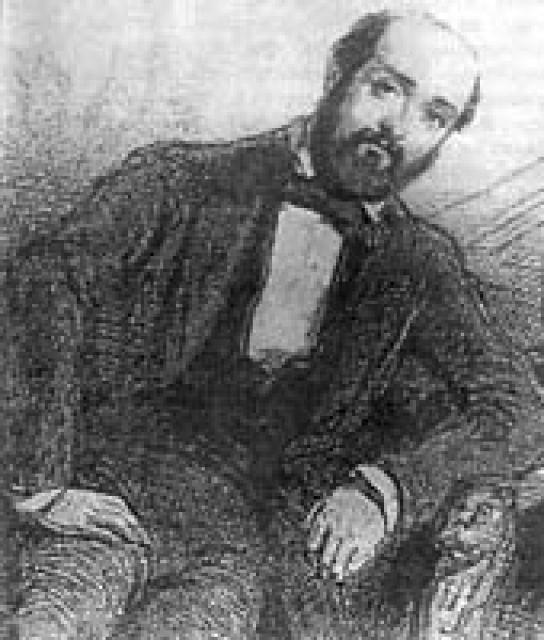
Henri Murger
 France
Henri Murger was a French novelist, poet and playwright whose stories helped define the popular image of the struggling young artist in nineteenth-century Paris. His most famous work, Scènes de la vie de bohème, drew on his own experiences among impoverished writers and painters and later inspired Giacomo Puccini’s opera La bohème.
Early Life and Parisian Bohemia
Murger was born in Paris in 1822 into a modest family and did not receive an extensive formal education. He cultivated himself through reading and became part of the city’s artistic circles, meeting writers, poets, musicians and painters. For several years, he lived precariously, earning money through newspaper articles and other literary work while sharing the uncertain life of young artists in the Latin Quarter.
Scènes de la vie de bohème
Between 1845 and 1849, Murger wrote the stories that became Scènes de la vie de bohème, first published in installments in the journal Le Corsaire. The work portrays a circle of young artists struggling with poverty, love, ambition and the small dramas of daily life. Its characters and episodes were drawn from the world Murger knew, though the book also shaped and romanticized the idea of “bohemian” life for later generations.
The stories were adapted for the stage in 1849 in collaboration with playwright Théodore Barrière. A book edition followed in 1851, establishing Murger’s reputation. Decades later, the work provided the basis for Puccini’s opera La bohème, which introduced the Parisian artists and their world to audiences around the globe.
Later Writing and Rural Retreat
After the success of his bohemian stories, Murger continued to write novels, plays and poetry. His books included Scènes de la vie de jeunesse, Les Buveurs d’eau and Le Sabot rouge. Around 1850, he began spending summers in Bourron-Marlotte, a village south of Paris, where he welcomed fellow artists including Théophile Gautier and Théodore de Banville. He later set Le Sabot rouge in the area.
Murger died in Paris on January 28, 1861, aged 38. Although he produced a varied body of work, it is Scènes de la vie de bohème that has endured most strongly, preserving a vivid literary portrait of artists living on the margins of Parisian society and inspiring one of opera’s most beloved works.


