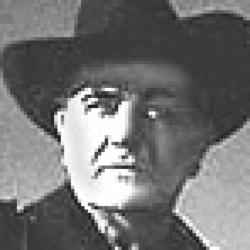
Henrih Borovik
 Russia
- Biography of Henryk Borowik
- Childhood and Education
- Career and Achievements
- Contributions and Activism
- Later Career and Legacy
Biography of Henryk Borowik
Henryk Borowik was a Soviet and Russian journalist, internationalist, screenwriter, writer, publicist, playwright, and philanthropist. He was born in 1929. His father, Aviezer Abramovich Borowik (1902-1980), was a conductor of a symphony orchestra and worked in the musical theater. His mother, Maria Vasilievna Borowik-Matveeva (1905-1970), was an actress. His wife, Galina Mikhailovna Borowik (Finogenova), was a history teacher and later worked as an editor in the cultural department of a television channel. Borowik had two children, Marina Genrikhovna Yakushkina (born in 1956) and Artem Genrikhovich Borowik (1960-2000), who became a well-known journalist and writer. Borowik also had three grandchildren: Ivan Dmitrievich Yakushkin (born in 1976), Maximilian Artemovich Borowik (born in 1995), and Christian Artemovich Borowik (born in 1997).
Childhood and Education
Henryk Borowik's parents were involved in the theater throughout their lives. In 1939, they were among the founders of the Pyatigorsk Theater of Musical Comedy. Henryk spent his school years in Pyatigorsk and remembers his teachers with great gratitude. They not only taught him academic subjects but also taught him about life. It is not surprising that Henryk maintained warm friendships with many of his classmates.
As a schoolboy in 1944-1945, Henryk worked as an assistant electrician and extra in the Pyatigorsk Theater. There, he became friends with Mahmud Esambaev and Mikhail Vodyanoy, who were just starting their brilliant careers in the arts. In 1947, after graduating from school with a gold medal, Borowik went to Moscow to study at the Moscow State Institute of International Relations. His backup plan was the Russian Institute of Theater Arts. His love for theater and music remained with him. After successfully completing his studies at MGIMO, Henryk Borowik was hired in the international department of the editorial office of the magazine "Ogonek" as a technical secretary. Despite having graduated with honors, he was happy with the position as it provided a warm atmosphere amidst the cold summer of 1952. The magazine was filled with wonderful people, many of whom were war journalists. Henryk was the youngest employee in the magazine and was looked upon with interest by the older generation, who wondered if this young man would become a journalist.
Career and Achievements
In the mid-1950s, Henryk Borowik gained recognition for his essays from "hotspots" such as Vietnam, China, Indonesia, and Burma, which were published in "Ogonek." These materials stood out from the general level of international journalism at the time. They were devoid of propaganda clichés, focusing on ordinary people with their doubts and hopes, and describing ordinary life situations rather than political schemes. In 1955, his first book of essays about Vietnam was published in the "Ogonek" library. In 1960, his essays about revolutionary Cuba were published in "Ogonek" and later formed the basis for his book "The Tale of the Green Lizard," which depicted living characters with extraordinary personalities. His essay about meeting Ernest Hemingway in Cuba and fishing with him on his legendary yacht "Pilar" became a sensation.
In collaboration with the renowned film director Roman Carmen, Borowik created the documentary film "Burning Island," which was shown in many countries worldwide. He also wrote the play "Rebellion of the Unknowns," which was successfully staged in various theaters across the country. In 1962, Borowik was admitted to the Union of Soviet Writers.
Borowik wrote over 20 books, including "The Tale of the Green Lizard," "Your Special Correspondent Met...," "One Year of Restless Sun," "Prologue," "May in Lisbon," "Report from Fascist Borders," and "Kim Philby." He also wrote more than 40 scripts for documentary films.
His plays, such as "Man Before the Shot" (1963), "Three Minutes of Martin Grow" (1970), "Interview in Buenos Aires" (1976), and "Agent 00" (1985), were performed in major theaters in the USSR and in many countries abroad.
Henryk Borowik was also a well-known television personality. He hosted popular programs such as "Camera Looks at the World," "Position," and "Testament of the 20th Century." His numerous appearances in the media and on television, as well as his own programs, provided insights into his multifaceted career as a writer, journalist, playwright, and television host.
Contributions and Activism
Henryk Borowik made significant contributions to the development of the Russian television channel "Culture." In the 1980s, he became the editor-in-chief of the magazine "Theater," doubling its circulation. He was elected as the Secretary of the Soviet Union of Writers for International Affairs in 1985-1987. During this time, he advocated for ending the isolation of Soviet writers from international literary organizations, including the PEN Club. His efforts led to a decision by the Central Committee of the Communist Party to establish connections between Soviet writers and writers around the world.
In 1987, Borowik was elected as the Chairman of the Soviet Committee for the Defense of Peace and Vice President of the World Peace Council. The organization underwent significant transformations under his leadership, becoming a prominent public organization that supported democratic reforms in the country. It worked towards dispelling the image of the enemy and ending the Cold War.
Borowik also worked as a political commentator for the Soviet State Television and Radio Broadcasting Company. He hosted programs such as "Camera Looks at the World" and "Position," where he covered various international and political topics. In the years of perestroika, he played an active role in assisting the democratic transformation of the country.
In 1989, Borowik was elected as a member of the Supreme Soviet of the USSR and served on the Standing Committee on International Affairs. He actively participated in the political events of that time and was vocal in his criticisms of the anti-constitutional actions of the State Committee on the State of Emergency during the August 1991 coup attempt.
Later Career and Legacy
In June 1990, Henryk Borowik left the Communist Party of the Soviet Union. He continued to support the process of democratization in the country. In 1994, he created the television series "For Nine Years Until the End of the War" for the "Ostankino" channel. The series revealed the true story behind the decision to send Soviet troops to Afghanistan in 1979. In the following year, Borowik worked on a 10-episode documentary film called "Russia in the War: Blood on the Snow," which depicted the truth about the Great Patriotic War.
Throughout his career, Henryk Borowik made a significant impact on television, literature, and public discourse. His works resonated with readers and viewers alike, providing insights into various countries and societies. He was known for his dedication to truth and his ability to convey the human experience in his writings. Borowik's contributions to journalism, literature, and public life continue to be recognized and appreciated.