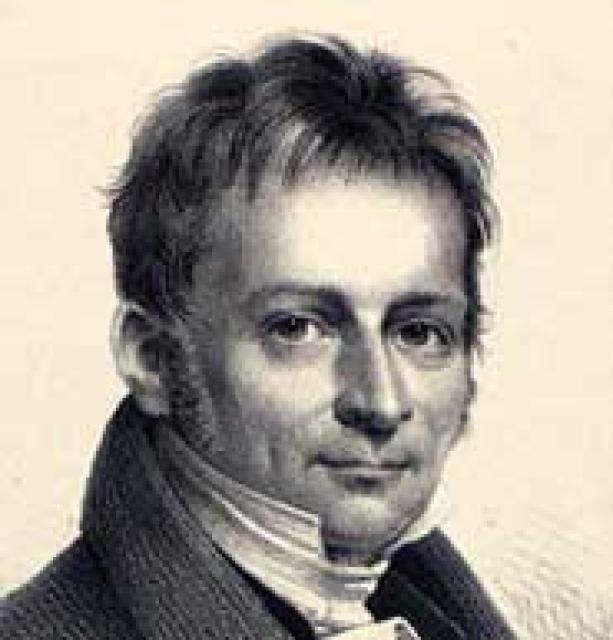
Henrik Steffens
 Germany
- Early Life and Influences
- Influenced by German Romanticism
- Academic Accomplishments
- Military Service and Prussian University
- Naturphilosophical Ideas
- Literary Contributions
Early Life and Influences
Henrich Steffens, a Norwegian-born German polymath, was the son of an army physician and a Danish mother. At the age of 14, he relocated to Copenhagen with his family. Pursuing studies in theology and science, Steffens enrolled at the University of Kiel in 1796 and the University of Jena in 1797, where he encountered the ideologies of Schelling, Fichte, Schlegel, and other Romantic figures.
Influenced by German Romanticism
In 1800, Steffens moved to Freiberg, where he was influenced by German mineralogist Abraham Gottlob Werner. Returning to Copenhagen in 1802, he delivered nine acclaimed public lectures, becoming a proponent of German Romanticism in Denmark.
Academic Accomplishments
Steffens became a professor at the University of Halle from 1804, teaching mineralogy, physiology, and natural history. In 1811, he moved to Breslau University, where he remained until 1832.
Military Service and Prussian University
During the Battle of Leipzig in 1813, Steffens joined the Prussian army as a lieutenant and later participated in the capture of Paris. In 1832, he commenced teaching at the University of Berlin and served as its rector from 1834 to 1835.
Naturphilosophical Ideas
Steffens' naturphilosophical concepts, drawing from advancements in physics and geology, emphasized the principle of individuation within the organic world. His ideas influenced his mentors Schelling and Schleiermacher, while his theory of color captivated Goethe, leading to an ongoing correspondence.
Literary Contributions
As an author, Steffens wrote novels and novellas. His ten-volume autobiography, "Was I Experienced," provided valuable insights into the Romantic circle and has been widely republished.





