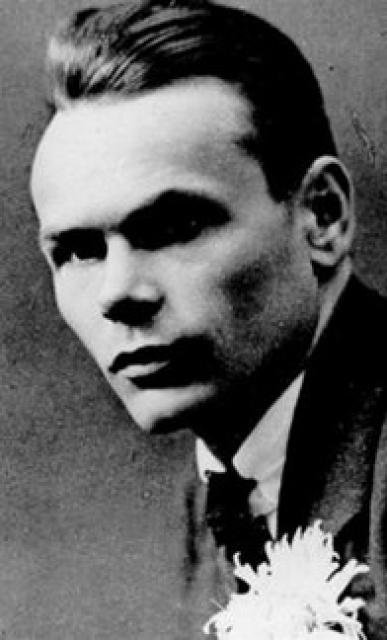
Henrik Visnapuu
 Estonia
- Early Life and Education
- Career and Education
- Literary Career
- Journalism and Public Service
- Exile and Later Years
- Legacy
Early Life and Education
Harald Visenapuu was born in Estonia on January 24, 1885. He graduated from high school in Tartu and later passed an exam to become an elementary school teacher. He taught in various schools before moving to Tartu in 1912.
Career and Education
In Tartu, Visenapuu taught Estonian language and literature at a girls' high school. He also attended lectures on philosophy at the University of Tartu. In 1916, he enrolled at the University of Tartu and studied in Berlin from 1922 to 1923.
Literary Career
Visenapuu's first poems were published in 1908. He became a member of the Siuru group, founded in 1917, alongside other renowned Estonian writers. He emerged as a talented Symbolist poet. In the 1920s and 1930s, he established himself as one of the leading Estonian poets of his time. His poetry exhibited traces of Futurist and Expressionist influences.
Journalism and Public Service
From 1917 to 1935, Visenapuu worked as a journalist. From 1935 to 1944, he was employed in the information department of the Estonian government.
Exile and Later Years
With the advance of the Red Army in 1944, Visenapuu fled to Germany. In 1949, he moved to the United States. Two of his poetry collections, "Amores" and "Poлевая фиалка," were translated into Russian by Igor Severyanin.
Legacy
Harald Visenapuu's poetry is characterized by its lyrical symbolism, exploration of human emotions, and vivid imagery. He is widely recognized as one of the most influential Estonian poets of the 20th century.


