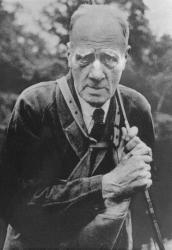
Henry Rider Haggard
 Great Britain
- Biography of Henry Rider Haggard
- Influence of Africa
- Egyptian and Mystical Themes
- Intriguing Plots and National Literary Legacy
Biography of Henry Rider Haggard
Henry Rider Haggard was an English novelist, journalist, and social activist. He is known for his 68 novels, collections of short stories, and books of a journalistic nature. Haggard gained fame for his historical adventure novels, which spanned a wide range of geographical settings including South Africa, Egypt, Peru, Mexico, the Netherlands, Spain, and England. He was a passionate traveler and meticulous researcher, having visited many of these countries.
Influence of Africa
Africa became the primary source of inspiration for Haggard, as he had served as a government official in South Africa in his youth and later made numerous return trips to the region. He possessed a deep knowledge of African history, culture (including some local languages such as Zulu), and mythology, which he brilliantly incorporated into his "African" novels. His most famous work, "King Solomon's Mines" (1885), revolves around the character of Allan Quatermain, an embodiment of the ideal qualities of an English gentleman.
Egyptian and Mystical Themes
Haggard also delved into Egyptian themes, with "Cleopatra" (1909) being his most well-known "Egyptian" novel. This work masterfully combines entertainment with historically accurate details. Haggard had a profound knowledge of Eastern religions and mystical teachings, and he was fascinated by the themes of death and the inevitability of fate. His novels centered around the enigmatic figure of Ayesha, who had "penetrated the secret of life." The most notable of these is his novel "She" (1887), which has been adapted into multiple films.
Intriguing Plots and National Literary Legacy
Haggard's skill in crafting captivating plots is evident in novels such as "Montezuma's Daughter" (1893) and "The Queen of Sheba's Ring" (1910). Although his novels set in England are slightly weaker in this regard, there are still works that have left a lasting mark on the national literary history. These include "The Ivory Child" (1911) and "The Lady of Blossholme" (1909).
Haggard's rich imagination, ability to construct engaging narratives, and superb storytelling talent contributed to the immense popularity of his works, with their sales surpassing those of R.L. Stevenson and A. Conan Doyle. As a journalist, Haggard was known for his writings on the disappearance of rural England, a subject that deeply saddened him. In recognition of his contributions, he was knighted in 1911.