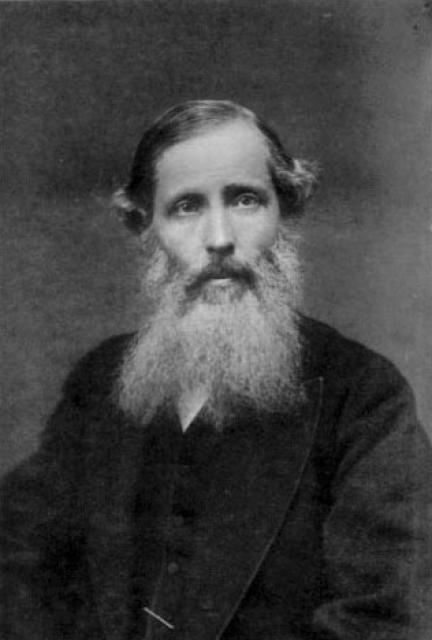
Henry Sidgwick
 Great Britain
- Biography of Henry Sidgwick
- Contributions to Philosophy
- Ethical Views
- Other Accomplishments
- Personal Life and Legacy
Biography of Henry Sidgwick
Henry Sidgwick was an English philosopher who was born on May 31, 1838 in Skipton, Yorkshire. He received his education at Rugby and Trinity College, Cambridge University. In 1883, he was elected as a professor of moral philosophy and held this position until the end of his life.
Contributions to Philosophy
Sidgwick was known for his analytical approach in his writings. His work "Principles of Political Economy" (1883) developed the systems of J.S. Mill and Jevons, while his work "Elements of Politics" (1891) applied utilitarianism to political theory. He also authored works such as "The Scope and Method of Economic Science" (1885) and "The Development of European Polity" (1903). However, his most well-known work is his first book, "The Methods of Ethics" (1874), which his successor at Cambridge, C.D. Broad, called "the best treatise ever written on ethics."
Ethical Views
Sidgwick's main goal in his research was to study the main concepts of "right" and "wrong" in egoism, utilitarianism, and intuitionism. He aimed to prove that only one of the proposed criteria, evaluating behavior based on the amount of happiness it brings, aligns with common sense. Sidgwick shared the positions of hedonism, believing that happiness is the only good. However, he believed that for a rational person, the happiness of others is equally important as their own (the concept of universalistic hedonism).
Other Accomplishments
Aside from his academic contributions, Sidgwick was one of the founders of Newnham College, Cambridge University in 1871, as well as the philosophical journal "Mind." He also served as the first president of the Society for Psychical Research in 1882.
Personal Life and Legacy
Despite being a relative of the Archbishop of Canterbury and the Prime Minister (Arthur Balfour), Sidgwick did not embrace Christianity and even declined membership on the council of Trinity College to avoid taking holy orders. He was known for his selflessness and noble character. Sidgwick passed away in Cambridge on August 29, 1900.



