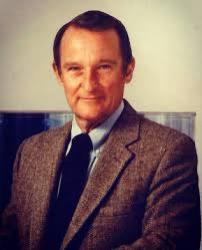
Herman Frasch
 Germany
Biography of Herman Frasch
Herman Frasch was a German mining engineer and inventor best known for his work with oil and sulfur. He was born on December 25, 1851, in Oberrot bei Gaildorf, Württemberg, and was the son of John and Frieda Henrietta Frasch, both of whom were originally from Stuttgart. Frasch attended the Latin school in Gaildorf and then was apprenticed to a bookseller in the neighboring town of Schwäbisch Hall.

At the age of 16, Frasch left his apprenticeship and sailed from Bremen to New York, before taking a train to Philadelphia. Upon arrival in the United States, he found work in the laboratory of John Michael Maisch at the Philadelphia College of Pharmacy. Here, he spent several years honing his knowledge in pharmaceutical chemistry. Frasch became known for his bold and innovative approach to experimentation. Gradually, he shifted his focus to industrial chemistry.
In 1874, Frasch established his own laboratory and obtained his first patent, which described a process for using tin scrap. His second patent, for a method of purifying solid paraffin, was issued in 1876. Both of these inventions played a significant role in industrial development. Prior to Frasch's discoveries, paraffin was merely a byproduct of the oil refining process. However, after Frasch's research, paraffin began to be used in the production of candles and for other industrial purposes. Additionally, Frasch invented paraffin paper, which was ideal for waterproof packaging of food products, confectioneries, and more, ensuring the safe transportation and storage of perishable items.
Other early inventions by Frasch were related to oil production, salt, and lead pigments. In 1885, he launched the Imperial Oil Company in Petrolia, Ontario. The oil from Petrolia contained up to 0.7% sulfur, which gave it a strong and unpleasant odor, similar to that of a skunk. This made the oil virtually undesirable. Frasch began working on sulfur removal and achieved success by treating the oil vapors with a mixture of iron, lead, and copper oxide. After removing the sulfur, Frasch's product became a serious competitor in the Pennsylvania oil market. Another company, John D. Rockefeller's Standard Oil in Lima, also faced the same issue. Rockefeller decided to purchase the Empire Oil Company and hired Herman Frasch, along with John Wesley Van Dyke, as his assistants. The industrial-scale desulfurization process was first used in 1888, and this purification method made Frasch a wealthy man.
During the search for oil deposits in Louisiana near the present-day city of Sulphur, sulfur was discovered beneath a layer of loose sand, approximately 200-300 meters thick. All attempts to extract sulfur using conventional mining shafts ended in catastrophe. Herman purchased the surrounding lands, made agreements with the owners of sulfur deposits, and built a plant. He then injected superheated water into the area, melting the sulfur. The molten sulfur would rise to the surface through internal tubes in the drilling wells, be collected in tanks, and solidify. The resulting blocks were later broken down and loaded onto railroad cars. Frasch became the head of the Union Sulphur Company, which dominated the sulfur market until his patent expired in 1911. When the sulfur reserves were depleted, the Union Sulphur Company shifted its focus to oil. Frasch was awarded the Beijing Medal in 1912.