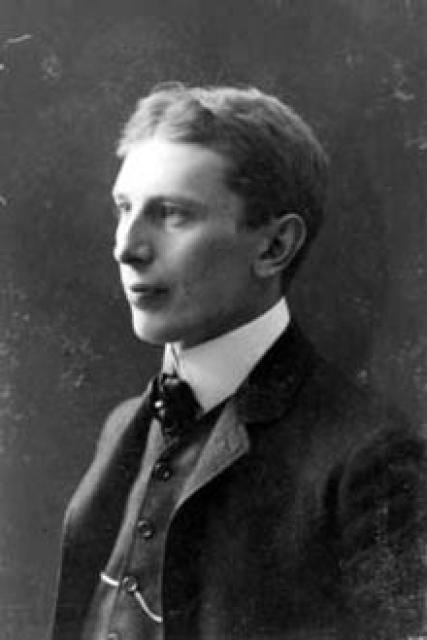
Herman Gesellius
 Finland
- Eliel Saarinen: A Master of Finnish National Romanticism
- Collaboration with Gesellius-Lindgren-Saarinen
- - Talberg House (1897-1898), Helsinki
- - Villa Vittrek (1901-1903), Kirkkonummi
- Legacy and Influence
Eliel Saarinen: A Master of Finnish National Romanticism
Early Life and EducationEliel Saarinen was born in Ruovesi, Finland, in 1873. As a leading figure of Finnish National Romanticism, he drew inspiration from Finnish folklore and medieval architecture. In 1893, he embarked on an internship at a factory in St. Petersburg, followed by his graduation from the Helsinki Polytechnic Institute in 1897.
Collaboration with Gesellius-Lindgren-Saarinen
From 1896 to 1907, Saarinen worked alongside Armas Lindgren and Herman Gesellius in the renowned architecture firm Gesellius-Lindgren-Saarinen. Together, they designed numerous iconic buildings, including:
- Talberg House (1897-1898), Helsinki
- Pohjola Insurance Building (1899-1901), Helsinki- Doctor's House (1900-1901), Helsinki
- Olofsborg Castle (1901-1903), Helsinki
- National Museum of Finland (1901-1910), Helsinki
International Recognition
Beyond Helsinki, Saarinen's work gained international acclaim with the Finnish Pavilion at the World's Fair in Paris (1898-1900). He went on to design several notable villas, including:
- Villa Vittrek (1901-1903), Kirkkonummi
- Villa Wittorp (1902), Kirkkonummi- Villa Suur-Merijoki (1902), Vyborg
Independent Projects
After 1912, Saarinen focused on independent projects due to health issues. Among his most notable solo works is the Vuorio Department Store (1908-1909), Helsinki, which was later extended by Armas Lindgren in 1913-1914.
Legacy and Influence
Eliel Saarinen's architectural vision played a pivotal role in shaping the Finnish cultural landscape. His unique blend of National Romanticism, Art Nouveau, and Modernism continues to inspire architects and designers around the world.



