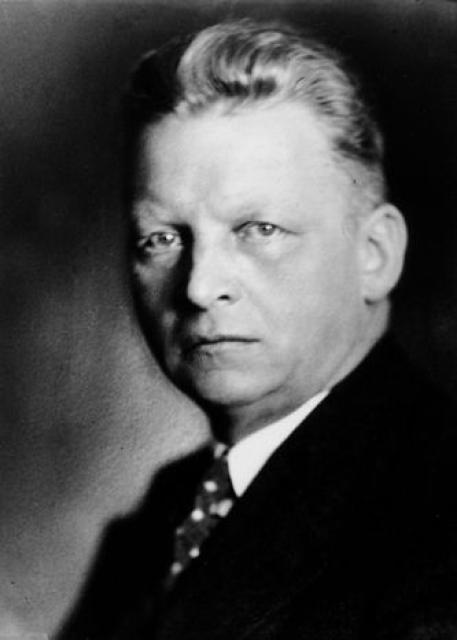
Hermann Abendroth
 Germany
Biography of Hermann Abendroth
Hermann Paul Maximilian Abendroth, also known as Hermann Abendroth, was a German conductor who worked with some of the best German ensembles throughout his life, leading opera and concerts in prestigious events. He was born in 1883 in Frankfurt, Germany, into a highly respected family of booksellers who had a significant influence on the country's culture.
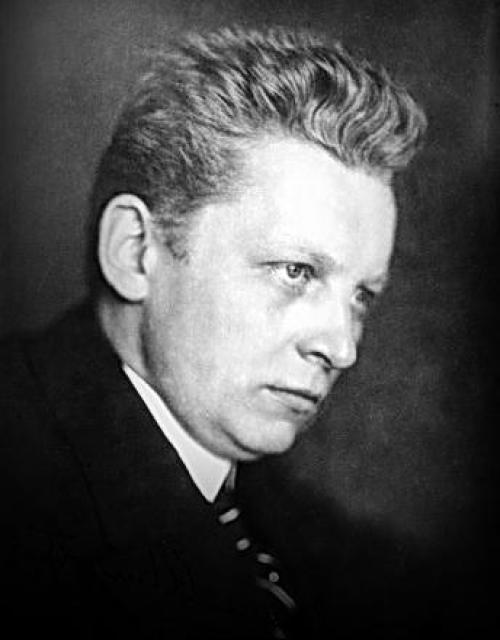
After completing his education at Frankfort Gymnasium, Abendroth initially intended to study library science in Munich. However, he unexpectedly found himself at the Munich Conservatory, where he studied music theory and composition under Ludwig Thuille, as well as piano under Anna Hirtzel-Langenham. He received instruction in conducting from Felix Mottl. While still a student, Abendroth joined the Orchestral Society of Munich and became its conductor.
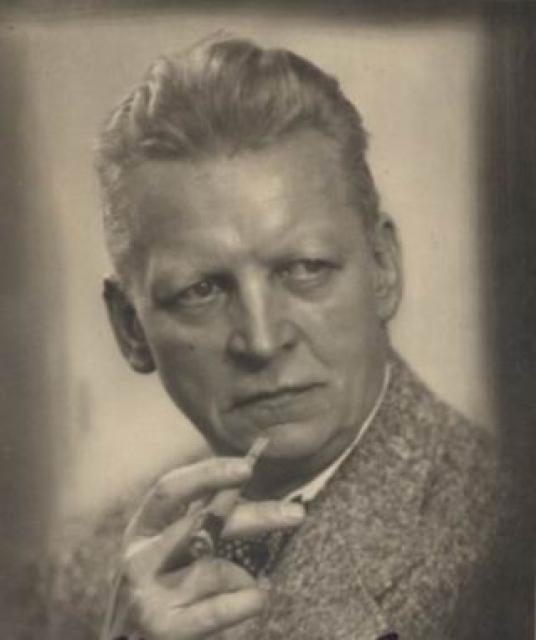
In 1905, Abendroth moved to Lübeck, where he assumed the position of Kapellmeister in the local theater. He also served as the conductor of the Society of the Friends of Music in Lübeck. From 1911 to 1914, he worked as the musical director in Essen, and in 1914, he became the conductor of the Gürzenich Orchestra in Cologne. In 1925, Abendroth was appointed the director of the Cologne Conservatory, which later transformed into the Cologne Musikhochschule under his leadership. In the 1930s, he also served as the general musical director in Bonn.
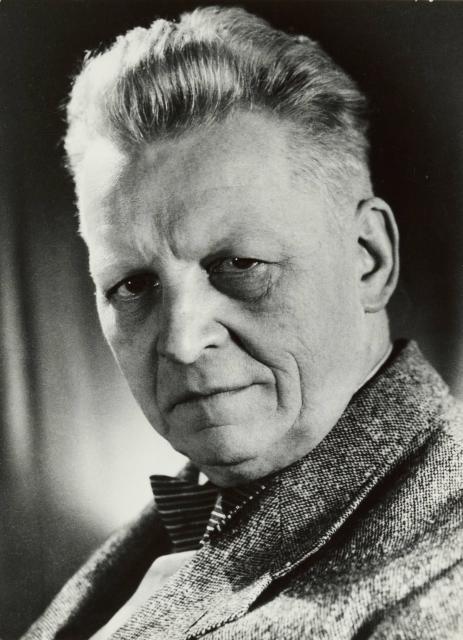
During the mid-1930s, Abendroth faced consequences for his position regarding the Nazi Party, which was gaining increasing power and authority in Germany. He was initially suspended from his state position and detained. However, many figures in the arts came to his defense, and he was soon reinstated in a more loyal capacity. Eventually, Abendroth himself joined the Nazi Party in 1937, a decision that garnered criticism for his abandonment of his ideals. Nevertheless, his musical talent was unparalleled, and he continued to work with the best German ensembles, leading opera and concerts in prestigious events.
After the war, Abendroth had to defend his activities during the Nazi regime and prove that his party membership carried no political significance. Once he cleared his name, he took charge of the Radio Symphony Orchestra from 1949 to 1956.
Hermann Abendroth was renowned worldwide as a talented interpreter of the works of composers such as Ludwig van Beethoven, Johannes Brahms, Anton Bruckner, Richard Wagner, Franz Joseph Haydn, Wolfgang Amadeus Mozart, Franz Schubert, Robert Schumann, and many others. He toured extensively, and his reputation extended even to Russia (then the Soviet Union).
Abendroth passed away on May 29, 1956, during a surgical operation for a stroke in Jena. He received a state-funded funeral, befitting his status as a recipient of numerous German honors. A postage stamp bearing his portrait was issued in the country one year after his death.
The musical legacy of conductor Hermann Abendroth is preserved in countless recordings made throughout his career.


