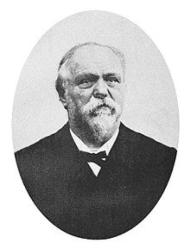
Hermann Keyserling
 Germany
- Hermann Graf Keyserling: A Baltic Philosopher and Writer
- Early Life and Education
- Journey into Philosophy and Literature
- The "School of Wisdom" and Global Explorations
- Contributions to Philosophy and the Arts
- Later Years and Legacy
Hermann Graf Keyserling: A Baltic Philosopher and Writer
Hermann Graf Keyserling was a renowned German philosopher and writer hailing from a distinguished Baltic noble family.
Early Life and Education
Born into a wealthy and influential family, Keyserling pursued higher education at several prestigious European universities. From 1897 to 1902, he studied geology, chemistry, and zoology in Geneva, Tartu, Heidelberg, and Vienna. His studies continued in Paris from 1903 to 1906, where he published his first philosophical work, "The Structure of the World."
Journey into Philosophy and Literature
A near-fatal duel in 1907 prompted Keyserling to shift his focus towards literature and philosophy. His experiences during the duel led him to question the traditional values of his aristocratic upbringing. In 1907, he delivered a series of lectures in Hamburg that formed the basis for his influential work, "Prolegomena to a Natural Philosophy" (1910).
The "School of Wisdom" and Global Explorations
From 1908 to 1917, Keyserling lived in his ancestral estate in Estonia, where he established the "School of Wisdom" with the support of former Grand Duke Ernst Ludwig. This institution aimed to foster intellectual dialogue and spiritual growth.
In 1911-12, Keyserling embarked on a circumnavigation of the globe, which he later chronicled in his acclaimed memoir, "Travel Diary of a Philosopher" (1919). His experiences during his travels deepened his understanding of different cultures and worldviews.
Contributions to Philosophy and the Arts
During his time in Darmstadt (1920-1939), Keyserling founded the "Society of Free Philosophy." He organized annual conferences that attracted renowned scholars such as N.A. Berdyaev, H. Driesch, L. Frobenius, C.G. Jung, E. Kretschmer, M. Scheler, E. Troeltsch, and R. Tagore. These conferences fostered interdisciplinary dialogue and contributed to the advancement of intellectual thought.
Later Years and Legacy
During World War II, Keyserling dedicated himself to writing "The Book of Origins," which he considered his magnum opus. After the war, the "Kaiserling Society" was established in Wiesbaden in 1947 and has since published the journal "Terra Nova."
Hermann Graf Keyserling's philosophical and literary works continue to inspire and challenge readers to this day. His ideas on spirituality, culture, and the human condition have left a lasting mark on Western thought and the global intellectual landscape.