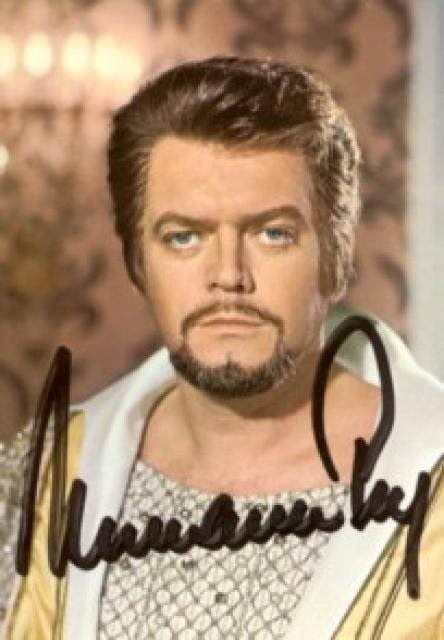
Hermann Prey
 Germany
Biography of Hermann Prey
German lyric baritone Hermann Prey was known for his performances of comic opera roles, songs, and romances. He was born Hermann Oskar Karl Bruno Prey on July 11, 1929, in Berlin, Germany, and grew up during the years of Nazi Germany, with his teenage years coinciding with World War II. He was due to be drafted into the army when the war ended.
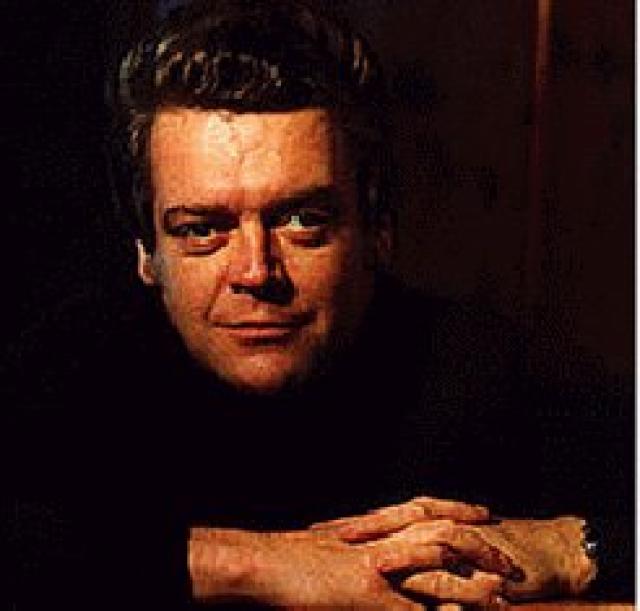
At the age of ten, Prey, then possessing a child soprano voice, sang in a classical choir, and it was during this time that his desire to become a singer took shape. As his parents did not allow him to pursue a musical education, he earned a living in his youth by performing with a dance group in nightclubs and bars, as well as making occasional appearances on the radio for RIAS. He studied singing at the Berlin Hochschule für Musik and in 1952 celebrated his first success, taking first place in a vocal competition in Frankfurt organized by Hessischer Rundfunk, with a role from Richard Wagner's "Die Meistersinger von Nürnberg."

Prey began giving concerts and made his operatic debut the following year in Wiesbaden. He then joined the Hamburg State Opera, where he performed until 1960. In his later years in Hamburg, Prey received frequent invitations to perform as a guest on other stages, including the Salzburg Festival. Prey frequently appeared at the Metropolitan Opera in New York between 1960 and 1970, and in 1965, he made his debut at the Bayreuth Festival.
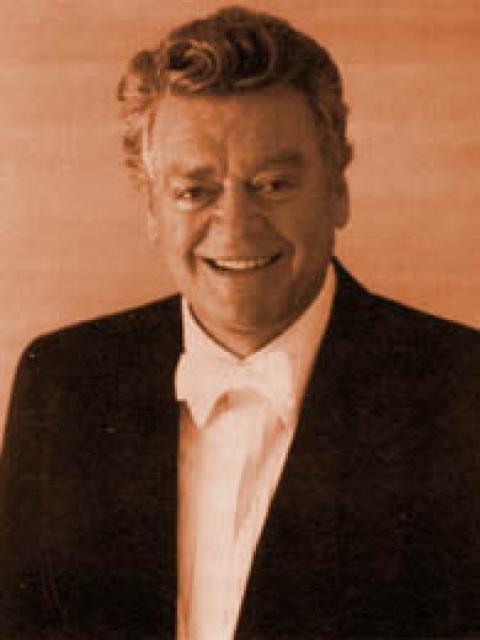
While he often performed in operas by Giuseppe Verdi early in his career, he later focused on the works of Mozart and Richard Strauss. Prey was renowned for his portrayal of Figaro in both Mozart and Rossini's operas, but he also frequently performed other Mozart roles, especially Papageno and Guglielmo. He also portrayed and recorded the role of Count Almaviva in "Le nozze di Figaro" and is considered one of the best (if not the best) interpreters of Eisenstein in Johann Strauss II's operetta "Die Fledermaus." Prey excelled in the Italian-style comic opera, showcasing his stage intelligence, liveliness, and humor. His virtuosic agility and outstanding comedic acting talent made him the obvious choice for numerous Mozart and Rossini productions in the 1970s.
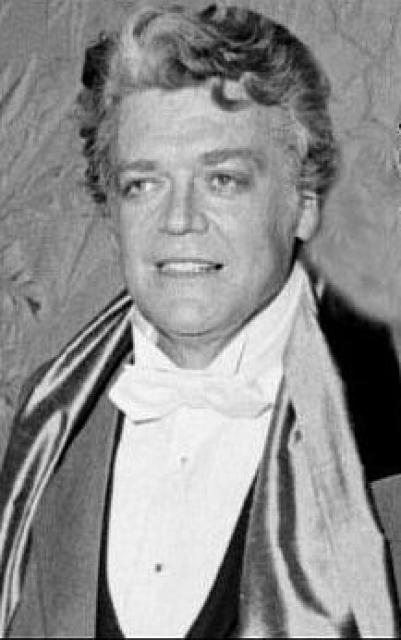
In 1972, Prey played Figaro in Jean-Pierre Ponnelle's televised production of "Il Barbiere di Siviglia" with Teresa Berganza as Rosina and Luigi Alva as Almaviva. Additionally, he portrayed Figaro in Ponnelle's 1976 film adaptation of "Le nozze di Figaro." Prey often performed in operettas and appeared on German television, gaining immense popularity with audiences. The artist was also known for his concert performances. His first American concert took place in 1956. He was a talented interpreter of Schubert, frequently performing with works by Bach, Brahms, and Gustav Mahler. Prey possessed a pure, flawless sound, darker and deeper than his colleague Dietrich Fischer-Dieskau but no less refined, and was equally capable of soaring into the tenor range effortlessly. Prey left behind numerous recordings, particularly of opera arias, songs, and romances. Unlike Fischer-Dieskau, Prey wisely limited his performances of Wagnerian roles to accommodate his soft, high baritone voice, such as Wolfram in "Tannhäuser" and Sixtus Beckmesser in "Die Meistersinger."
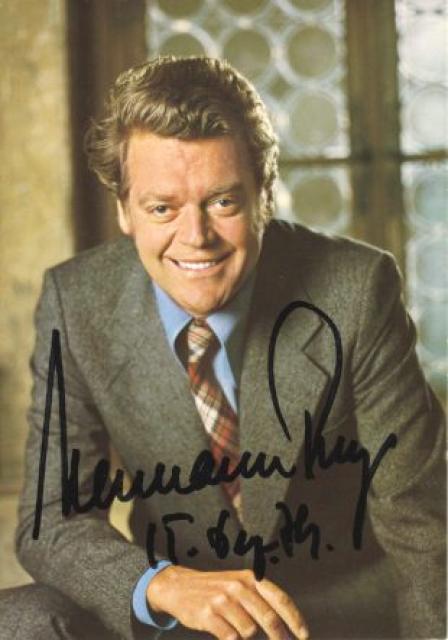
Starting in 1982, Prey taught at the Musikhochschule Hamburg and wrote his autobiography. In 1988, he directed a production of "Le nozze di Figaro" in Salzburg.
In 1954, Hermann married Barbara Pniok, and they had two daughters, Annette and Franziska, and a son, Florian Prey, who also became a baritone singer.


