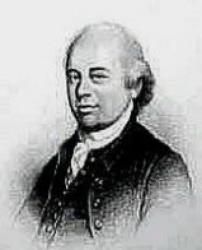
Hernando Soto
 Spain
- Hernando de Soto: The Spanish Explorer
- Early Explorations and Encounters
- Journey to Florida
- The Mississippi Expedition
- Route of the Expedition
- Legacy and Impact
Hernando de Soto: The Spanish Explorer
Hernando de Soto, a prominent Spanish explorer, is renowned for his expeditions in the southeastern regions of North America. Born in Extremadura, Spain, he pursued his education at the University of Salamanca before embarking on a perilous journey to Panama at the tender age of 19.
Early Explorations and Encounters
In Panama, de Soto gained the patronage of Governor Pedro Arias Dávila, who played a pivotal role in his early career. In 1530, de Soto joined Francisco Pizarro's expedition against the Incas, becoming the first European to encounter and negotiate with the revered Inca ruler, Atahualpa.
Journey to Florida
Returning to Spain at the age of 36, de Soto reportedly left behind an indigenous princess and several children in the New World. However, he amassed a fortune of 100,000 gold ducats, which he carried with him. Upon his arrival in Spain, he was hailed as a hero and married Isabel de Bobadilla, the daughter of Pedrarias Dávila. In 1537, King Charles I of Spain appointed de Soto as the governor of Florida, a vast territory encompassing modern-day Texas, Florida, and areas to the north.
The Mississippi Expedition
On November 6, 1538, de Soto set sail with his fleet, making a brief stopover in Cuba before landing in Florida on May 30, 1539. His ambitious expedition sought to explore the interior of North America. Accounts of this journey are derived from writings by his secretary, Rodrigo Randel; expedition member, Luis Hernández de Biedma; and an anonymous author known as The Gentleman of Elvas.
Route of the Expedition
Based on these accounts, de Soto's expedition traversed the northwestern coast of Florida from Tampa Bay to the Tallahassee region, turning northeast towards the Savannah River. They ascended its valley to the Blue Ridge Mountains, crossed them, and reached the Alabama River. Descending the river to Mobile Bay, they ventured northwest towards Memphis, encountering the Mississippi River on May 8, 1541.
After crossing the Mississippi, de Soto headed west towards the Arkansas River (above the mouth of the Canadian River), later returning to the Mississippi Valley. While there, he succumbed to fever and passed away in Louisiana on May 21, 1542. To maintain the indigenous perception of de Soto as a celestial figure, his body was weighted and cast into the river before his men continued downstream to the Gulf of Mexico. The expedition eventually reached Mexico in September 1543.
Legacy and Impact
De Soto's expedition played a significant role in the exploration of the American interior. It charted regions of Florida, Georgia, South Carolina, Tennessee, Alabama, Arkansas, Mississippi, Texas, Oklahoma, and parts of Missouri and Louisiana for the first time. His journey provided valuable geographical knowledge and insights into the indigenous cultures of these areas. However, it also had devastating consequences for the native populations, who faced widespread death and displacement due to European diseases and conflicts.