Hovard Head
 USA
USAHoward Head: Revolutionizing the World of Sports
Howard Head, an aviation engineer credited with inventing laminated skis and oversized tennis rackets, revolutionized two sports with his incredibly significant innovations. He achieved this through an intuitive approach, which is rarely seen in business. His education at Harvard's engineering department and early manufacturing experience served as perfect examples of the upbringing of a left-brained individual. However, he remained a true innovator, constantly seeking new ideas with right-brained thinking. Head used his gift of foresight to bring about a revolution in two industries, but initially, his goal was not to change the industries, but rather to improve his own abilities. He was not an expert in either skiing or tennis and created these two extraordinary innovative ideas solely to excel in the sports. He was completely incompetent in both sports, and this incompetence reflected in the sports equipment he invented. He believed that if he was experiencing problems, others must be facing the same issues and set out to solve them. Thus, Head changed the equipment that had been considered unchangeable for the entire century of these sports' history. He first replaced outdated wooden skis with his artistic masterpiece, the Head metal skis. Then, he revolutionized the tennis industry by introducing the oversized Prince tennis rackets. These incredibly significant innovations changed both sports for professionals and amateurs alike. Sports Illustrated did not trust both of Head's "cheating" inventions until athletes using his equipment claimed they were experiencing clear progress. Eventually, the magazine recognized his invention as "the most successful racket in the history of tennis." It didn't take long to come to such a conclusion, as Head's innovation became the first significant change in racket manufacturing technology in the past century. Head's last contribution to the tennis industry was Bjorn Borg's unsuccessful attempt to return to professional tennis in 1990. Borg decided to play with his old wooden racket, which had made him the world's number one player in the 1970s and early 1980s. Borg was ridiculed by the media and opponents, who predicted his quick defeat due to the outdated racket. Borg's comeback lasted less than a month. The tennis industry leaders, who were the most critical of using space-age materials like metal, aluminum, and graphite in the early 1970s, switched from traditional wooden frames to metal ones. It was a notable step forward, but manufacturers completely disregarded that, in addition to durability, the racket had to meet a multitude of changing requirements. These industry leaders fell into the classic trap of trying to create a new product without disrupting the "status quo" of the existing technology. Their defensive approach to the innovation process gave birth to a product based on new materials and old ideas. They were not willing to abandon the old product for an entirely new one. Only someone new to the industry, who had not made any financial or psychological investment in the old industry, was capable of doing that. The industry experts were afraid to disrupt the existing order of things. The experts did not show insight in the question of the size of the tennis racket. To say something new, an outsider was needed, someone not bound by the established rules of tennis. Head "constructively destroyed" the wooden racket. He already had experience in "constructive destruction" of the wooden (walnut) ski industry and introducing innovation - metal skis. Therefore, he endured rejections and negative evaluations from traditionalists, who tried to crush his attempt to destroy their sacred objects. All the industry leaders - Wilson, Dunlop, Spalding, and McGregor - partially embraced the space-age trends and began using metals and alloys in production, but they did not dare to abandon the old technologies, considering traditions immutable. None of these industry leaders had the foresight to consider the size of the racket, the hitting area, or any other aspect of tennis. In his interview with Sports Illustrated, the quote from which is given below, Head once again confirms that it was his intuitive thinking that allowed him to succeed where others failed: "The invitation to create something new went unanswered because traditional geometry is so entrenched in people's minds that no one thought there could be anything better... more wisdom in will than in the head" (Kennedy, 1980). The traditional style of far-sighted innovators was not Head's aim for his inventions to make money. He wanted to improve his skills and solve a problem that he found intriguing. Undoubtedly, each of his innovations made him wealthier, but his passion was directed at solving the problem, not enriching himself. This is an inherent characteristic of any true innovation. Head faced strong resistance at every step of his endeavors. Resistance to the innovation process is a characteristic of our society, as Head explained to Ski magazine in 1964: "The more original the idea, the more opposition it encounters."

Biography of Howard Head
Howard Head was born in Philadelphia on July 31, 1914, into a family belonging to the upper middle class. His father was a dentist with a private practice. (Research has shown that the greatest innovators had fathers who had their own businesses.) His older sister was a renowned writer, and Howard was determined to follow in her footsteps and pursue a career in writing. This desire was so strong that Howard spent years pursuing literature and changed three jobs (all related to writing) until he realized that this career was not his calling.
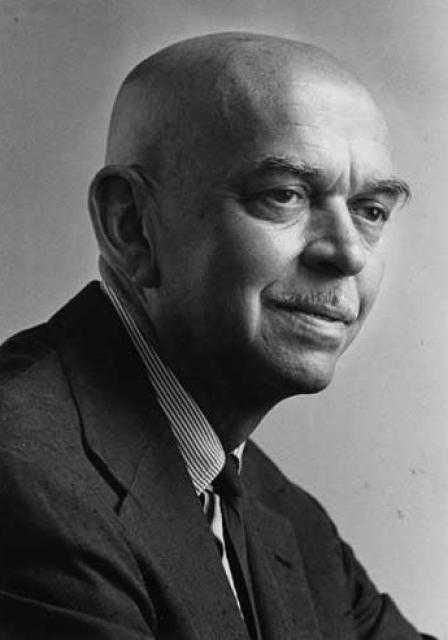
Howard enrolled at Harvard with hopes of receiving a literary education but became disillusioned after a few semesters. He switched to the engineering department in his second year and graduated with distinction in 1936 with a degree in engineering. He still wanted to write and took a job at a publishing company, working as a stenographer, reporter, and managing editor. He was fired twice from the position of managing editor of news agencies and once from the position of newspaper reporter. Howard gave up his writing career only when faced with the harsh reality of shattered hopes. For three years, he earned no more than $20 per week. In 1939, he decided to take a test to determine his writing potential and "became highly angered and disappointed when it turned out that he had the lowest literary ability of anyone who had ever taken the test." However, it was discovered that he possessed remarkable structural imagination abilities. His ability to think in three dimensions was simply incredible. He realized that his calling was in intuitive thinking and spent the entire war working in the design department of Glenn L. Martin Aircraft Company in Baltimore. Through his work, he dealt with structural engineering materials and drawings, which undoubtedly helped him in the process of ski and racket development.
Howard Head will go down in history as one of the greatest innovators of the 20th century. Howard consistently faced failures in all areas where he passionately desired to succeed. The hopes he cherished the most were shattered. He desperately wanted to be a writer and suffered a crushing defeat. He wanted to master the art of skiing but failed. He thought tennis would be his solace, but he faced the same fate. A person with less temperament would probably have been broken by these failures, but they only motivated Howard, becoming the catalyst for his journey towards great achievements. He pursued skiing and tennis with the determination of a hungry beast until his death in 1991. In the end, he came out as a winner, not in the sports themselves, but as the person who, more than anyone in history, influenced these sports. His desire to personally conquer these sports resulted in two great revolutionary innovations. He became a decent tennis player and skier, but his true success lay in transforming his incompetence into creative success through intuition. He brought about radical changes in these sports that impacted both amateurs and professionals.
During World War II, Howard frequented parties and spent a lot of time playing poker. It was during one of these poker games with a particular company that Howard embarked on a fateful ski trip to Stowe, Vermont, in 1946. He was deeply humiliated by how poorly he skied on wooden skis. This trip became an accidental prelude to his future:
"I was humiliated and felt disgusted with how badly I skied, and, true to form, I was inclined to blame it all on those long, clumsy wooden skis. On the way home, I caught myself boasting to the military officer sitting next to me that I could make skis much better than the wooden ones from materials used in the aircraft industry" (Kennedy, 1961).
Later, Howard noted that had he known then that it would take him four years and forty ski models to achieve his goal, he would have given up. Howard resigned from Martin on January 2, 1948, rented a room in Baltimore, and entered the world of entrepreneurship. He took the $6,000 he won from poker and used it to buy equipment and materials needed to create the first prototypes. He worked day and night and, in the first year, made six pairs of skis that he was proud of and delighted with. Howard believed that he was destined to ski on Head metal skis in 1949. He took these skis to Vermont, but one of the instructors broke them one by one within an hour. Howard said, "Each time one broke, something broke inside me."
Over the next two winters, Howard faced another forty iterations and, in 1951, created aluminum skis with plywood cores for strength, steel edges for easier turns, and plastic running surfaces for better glide. Ski instructors could not break them. He named them "Standard" and sold them for $85, which was an exorbitant price for that time. It took some time for people to get used to the skis, but within a few years, they became a universally recognized symbol of skiing. The patent Howard received for the metal "Standard" skis allowed Head Ski Company to outpace other firms for several years, as they were convinced that Howard was too self-confident and had embarked on an impossible endeavor. Howard turned Head Ski Company into the dominant ski manufacturer. He never liked playing corporate games and, eventually, in 1969, he sold Head Ski Company to AMF for $16 million. Intuition and perseverance were the tools that allowed him to surmount the obstacles thrown at him by the Patent Office. Howard created a laboratory testing machine equipped with high-speed cameras and documented on film that his revolutionary invention increased hitting power by 20% while expanding the hitting area fourfold compared to traditional rackets. By appealing to statistics and technique, he proved to the non-believers that there was a significant difference between his racket and traditional ones. Howard even discovered significant possibilities in his racket that he might not have noticed otherwise. He said, "We were amazed to discover that the best spot for hitting accurately was a 3-foot area of added length, an area that didn't even exist when playing with the old rackets." His efforts did not go in vain. After two years of intensive work and statistical analysis, the US Patent Office granted Howard Head patent #3,999,756 (1976), valid for seventeen years.
As a result of Howard's intuitive approach to problem-solving, two revolutionary innovations emerged that simultaneously changed the world of skiing and tennis. Howard said, "I invented skis and rackets not for money but to help myself. I can invent when I really need it. Necessity turns into achievement through willpower" (Sports Illustrated, September 1980). Skiing and tennis underwent radical changes thanks to the foresight and "will" of this true innovator. Howard remained passionate about both skiing and tennis until his death. He became a victor, not in the sports themselves, but in being the person who had the greatest impact on these sports than anyone else in history. His desire to personally conquer these sports resulted in two great revolutionary innovations. He became a decent tennis player and skier, but his true success lay in transforming his incompetence into creative success through intuition. He brought about radical changes in these sports that impacted both amateurs and professionals.