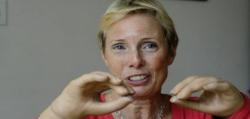
Howard Shulman
 USA
- Infancy and medical treatment
- Foster care and a difficult childhood
- Risk, work and rebuilding
- Finding his birth mother
- Memoir and advocacy
Howard Shulman’s life began with a devastating medical crisis and the loss of the family he had expected to know. At only a few days old, he developed a staphylococcal infection that destroyed much of his nose, lips, palate and tissue around one eye. His parents left him in the hospital, and he became a ward of New Jersey. In his memoir, Running from the Mirror, Shulman recounts the long medical treatment, painful childhood and difficult choices that followed, as well as his eventual reunion with his birth mother.

Infancy and medical treatment
Shulman was born in Orange, New Jersey. According to his own account, the infection appeared three days after his birth and spread across his face. Doctors were unable to stop the damage before it had taken away much of his nose, lips, upper palate, tear ducts and lower eyelid. His parents, overwhelmed by his condition, relinquished him at the hospital.
A state-employed surgeon took responsibility for his care and began reconstructive procedures. Shulman spent his first years in a hospital, undergoing repeated operations and grafts. His early life was shaped by the practical demands of treatment, while the absence of his parents became a wound he carried into adulthood.
Foster care and a difficult childhood
After leaving the hospital, Shulman grew up in New Jersey’s foster-care system. His memoir describes a childhood marked by medical pain, bullying and isolation. He struggled at school and eventually dropped out. For a period he was homeless, with few reliable supports and little sense that the future held a place for him.
He has spoken about how rejection and the way other people reacted to his appearance fed anger and alienation. In Running from the Mirror, he revisits those years from the perspective of an adult trying to understand how early abandonment shaped his decisions, rather than presenting his past as a simple story of triumph.
Risk, work and rebuilding
As a young man, Shulman became involved in drug dealing, including transporting drugs across the United States. He later described that period in interviews and in his memoir as a dangerous attempt to survive and find direction. He eventually left that life behind and built a more stable career, becoming the owner of a successful business. He also bought and operated a nightclub in San Diego, where he met the woman who became his wife.
Finding his birth mother
For years, Shulman believed he would never learn the truth about his birth family. A chance event eventually gave him a lead, and he connected with his birth mother nearly four decades after she had left him at the hospital. His father had died by then. The reunion was complicated: Shulman said it was not the easy, celebratory embrace often shown in television stories about family reunions. It brought difficult questions and emotions, but also gave him access to relatives and a relationship he had never expected to have.
In interviews about the experience, he has described forgiveness and making peace with the past as part of the process, while acknowledging that reunion did not erase what had happened.
Memoir and advocacy
Shulman published Running from the Mirror: A Memoir in 2015. The book tells his story of illness, reconstructive surgery, foster care, homelessness, drug dealing and the search for a life beyond the identity imposed on him by abandonment and facial difference. He has also spoken at writers’ conferences and in interviews about bullying, resilience and the difficulty of growing up in care.
Drawing on his own experience in the foster system, Shulman has supported organizations helping vulnerable children and young people, including Hillsides in California. His public work centers on the idea that a painful beginning does not have to dictate the shape of an entire life.