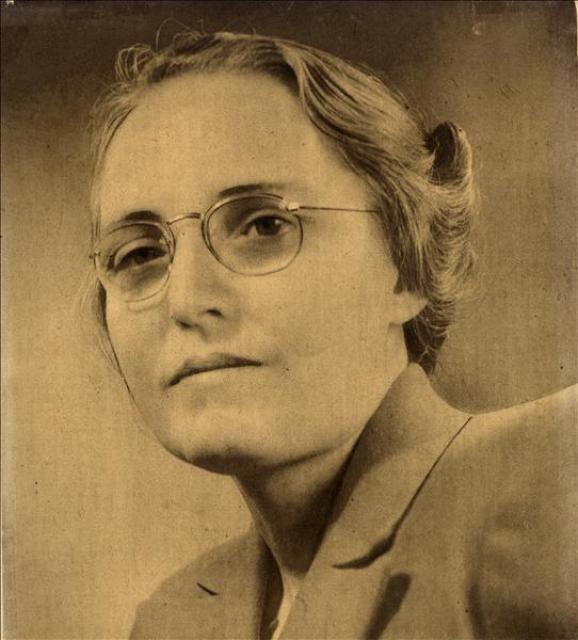
Hrisa Hadzivasiliu
 Greece
- Early Life and Education
- Communist Party Involvement
- Resistance and Leadership
- Political Controversies
- Varna Agreement and Aftermath
- Civil War
- Grammos Mountains and Women's Union
- Disfavor and Death
Early Life and Education
Chrisi Hadjivassiliou was born in 1904 in Odemisio, Turkey. Her family moved to Athens after the Asia Minor Catastrophe. At eighteen years old, she worked as a typist.
Communist Party Involvement
Influenced by the Russian Revolution and communist ideals, Hadjivassiliou joined the Communist Party of Greece (KKE) in 1924. She became a trusted typist for the Central Committee and later for the Soviet embassy in Athens. In 1935, she was elected to the Central Committee, becoming the first woman to hold such a position.
Resistance and Leadership
During the German, Italian, and Bulgarian occupation of Greece in World War II, Hadjivassiliou played a key role in the resistance movement. She was a founding member of the National Liberation Front (EAM) and helped establish the National Council and the People's Liberation Army of Greece (ELAS). She was elected a national councilor from Piraeus.
Political Controversies
While a member of the Politburo, Hadjivassiliou advocated for moderate positions and opposed confrontations with the British. She criticized the decision to occupy Athens in 1944. Despite her moderation, the KKE and EAM clashed with British troops, leading to the December Events.
Varna Agreement and Aftermath
Hadjivassiliou pushed for a political solution to the December Events and the signing of the Varna Agreement. She believed a socialist republic could not be established in Greece due to its geographic location. After the agreement, she remained active in the KKE and attended the founding congress of the Women's International Democratic Federation (FDIF).
Civil War
Hadjivassiliou opposed the creation of the Democratic Army of Greece, fearing it would provoke further conflict. However, the Civil War began in 1946. She led the underground work in Athens, but was replaced by Stergios Anastasiadis in 1948.
Grammos Mountains and Women's Union
Hadjivassiliou was called to the Grammos mountains in 1948 and elected chair of the All-Greek Democratic Women's Union.
Disfavor and Death
After the Greek government received American aid through the Marshall Plan, the situation for the Democratic Army worsened. Hadjivassiliou was dismissed from her duties in 1949 due to health issues. She died of leukemia in a Budapest hospital in 1950 and was buried in Hungary. Her remains were returned to Greece in 1975.



