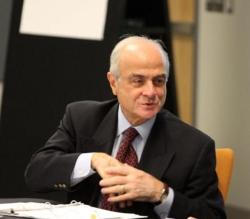
Hugh Hefner
 USA
- Childhood and Education
- The Making of Playboy
- Clubs, Television, and the Mansion
- Family and Relationships
- Later Years and Controversies
- Death and Legacy
Hugh Hefner turned a magazine into a world-sized fantasy of bachelor freedom. In December 1953, he launched Playboy with borrowed and family money, a nude photograph of Marilyn Monroe, and the promise of a new kind of men’s magazine. The venture became a publishing and entertainment empire—and made its founder one of the most recognizable, and most debated, figures of the twentieth century.

Childhood and Education
Hugh Marston Hefner was born in Chicago on April 9, 1926, the elder son of accountant Glenn Hefner and teacher Grace Hefner. He grew up in a strict Methodist household where, as he later recalled, sex was treated as a subject that should not be discussed. The distance between that conservative upbringing and the sensual world he eventually built became part of his personal mythology.
At Steinmetz High School, Hefner drew cartoons and wrote for student publications. He served in the U.S. Army during the Second World War, producing cartoons for military newspapers, then studied psychology at the University of Illinois, graduating in 1949. He had married his high-school sweetheart, Mildred Williams, just before graduation. After college, he took a series of writing, advertising, and publishing jobs, including a position writing promotional copy at Esquire magazine.
The Making of Playboy
Hefner left Esquire in the early 1950s and began planning a magazine of his own. He raised about $8,000 from friends and family, including a loan from his mother, and assembled much of the first issue at his apartment in Chicago. The magazine was initially planned under the name Stag Party, but a potential conflict with another publication led to a last-minute change. Playboy’s first issue appeared in December 1953 without a cover date, since Hefner did not know whether there would be a second.
The inaugural issue’s most attention-grabbing feature was a nude photograph of Monroe, originally taken for a calendar. It helped sell more than 50,000 copies. But Hefner’s ambition extended beyond pinups. Playboy paired nude photography and the Playmate centerfold with fiction, interviews, cartoons, fashion, and articles on politics and culture. Writers including James Baldwin, Norman Mailer, and Joyce Carol Oates appeared in its pages. Alex Haley’s interview with Malcolm X helped lay the groundwork for The Autobiography of Malcolm X, and interviews with figures such as Muhammad Ali and Fidel Castro made the magazine a platform for conversations that reached beyond its core readership.
Hefner’s monthly “Playboy Philosophy” editorials connected sexual permissiveness to wider ideas about free expression, civil rights, and personal liberty. Playboy was part of the movement to normalize discussion of contraception and premarital sex at a time when many Americans considered the subject taboo. In 1963, however, Hefner was arrested on an obscenity charge after Playboy published nude photographs of Jayne Mansfield. The jury could not reach a verdict. The case strengthened his public identity as a First Amendment advocate, and Playboy Enterprises later established the Hugh M. Hefner First Amendment Awards.
Clubs, Television, and the Mansion
By 1960, the magazine had become the foundation for a larger lifestyle brand. Hefner began hosting Playboy’s Penthouse, a television variety and interview show, and opened the first Playboy Club in Chicago. The clubs spread internationally, with waitresses known as Bunnies wearing corseted costumes, cuffs, collars, and rabbit ears. The image became a symbol of Playboy’s mix of glamour and sexual display. Hefner also pushed back when some club franchises excluded Black members, taking control of the locations and declaring opposition to segregation.
Playboy’s business reached its high point in the late 1960s and early 1970s. The company expanded into clubs, resorts, television, and other entertainment ventures, while the magazine’s circulation peaked at more than seven million copies a month. Hefner himself became part of the brand: pipe in hand, silk pajamas, a private jet, and a crowded mansion. The Chicago Playboy Mansion became his home before he established the better-known Los Angeles estate, where parties and celebrity visits helped turn his private life into public spectacle.
The expansion also drew criticism. Playboy’s world was built around the pleasure of male readers, and its images made women’s bodies central to the product. Feminists challenged Hefner’s claim that sexual liberation benefited women equally. Gloria Steinem worked undercover as a Bunny in 1963 and reported on the costume and service work as restrictive and demeaning. Hefner considered himself an ally of women’s sexual freedom; critics argued that Playboy’s version of liberation still placed women on display for men.
Family and Relationships
Hefner’s first marriage, to Mildred Williams, lasted from 1949 to 1959. They had two children, Christie and David. In 1989, he married model Kimberley Conrad, who was named Playmate of the Year in 1989; they had two sons, Marston and Cooper. The couple separated in 1998, though their divorce was not finalized until 2009. In 2012, Hefner married Crystal Harris, who was six decades younger than he was. They remained married until his death.
His relationships and home life became entertainment in their own right. The reality series The Girls Next Door, which began in 2005, followed Hefner and three of his girlfriends—Holly Madison, Bridget Marquardt, and Kendra Wilkinson—at the Los Angeles mansion. The show gave viewers a brightly edited, playful version of life in his orbit and introduced him to a younger audience. It also reinforced the image of Hefner as an elderly impresario surrounded by young partners.
Later Years and Controversies
A stroke in 1985 prompted Hefner to step back from daily operations. His daughter Christie Hefner, who had become company president, took over as chief executive and chair in 1988. He remained the public face and editor-in-chief of Playboy, even as the company adjusted to new competition and changing media habits. The internet and rival magazines eroded the publication’s dominance, and Playboy’s circulation fell far below its 1970s peak.
After Hefner’s death, the A&E docuseries Secrets of Playboy (2022) brought renewed attention to the power dynamics around the mansion. Former girlfriends, Playmates, and employees described a coercive atmosphere and alleged sexual misconduct, including sex recorded without women’s consent. These were accounts presented by participants, not findings from a court proceeding. Hefner’s son Cooper and hundreds of former associates disputed the series’ portrayal and defended his character. The Playboy company, which had separated from the Hefner family’s ownership, said it supported the women who spoke out and emphasized that the company had changed under new leadership.
Death and Legacy
Hefner died at the Playboy Mansion on September 27, 2017, aged 91. Playboy said he died of natural causes. His legacy remains divided. Admirers credit him with challenging censorship, expanding public discussion of sex, supporting civil-rights causes, and giving serious journalism and fiction a place in a mass-market magazine. Critics see an empire that packaged women as commodities and dressed male privilege as sexual freedom. Both readings are part of his story: Hefner reshaped American publishing and popular culture, while the culture he created continues to be judged for who it empowered and who it put on display.