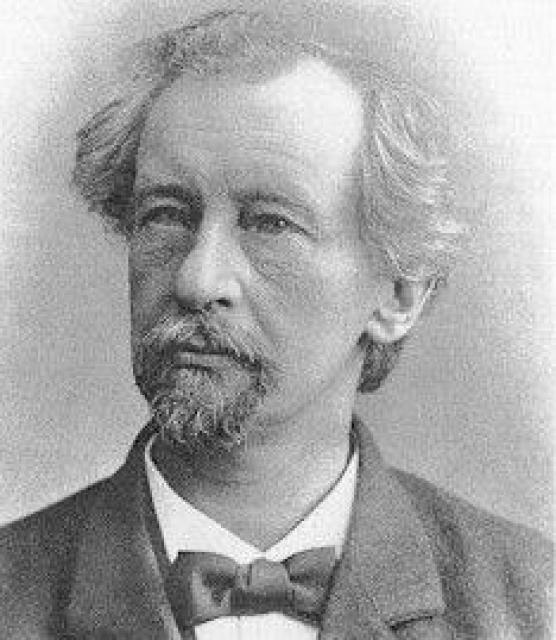
Hugo De Vries
 Netherlands
- Hugo de Vries: A Dutch Botanist and Geneticist
- Early Interest in Botany
- Research and Contributions
- Later Years and Legacy
Hugo de Vries: A Dutch Botanist and Geneticist
Hugo Marie de Vries, also known as Hugo de Vries, was born in 1848 in Haarlem, Holland. He was the eldest son of Gerrit de Vries, a lawyer and politician who served as the Dutch Prime Minister from 1872 to 1874. His mother, Maria Everardina Reuvens, was the daughter of a professor of archaeology at Leiden University.
Early Interest in Botany
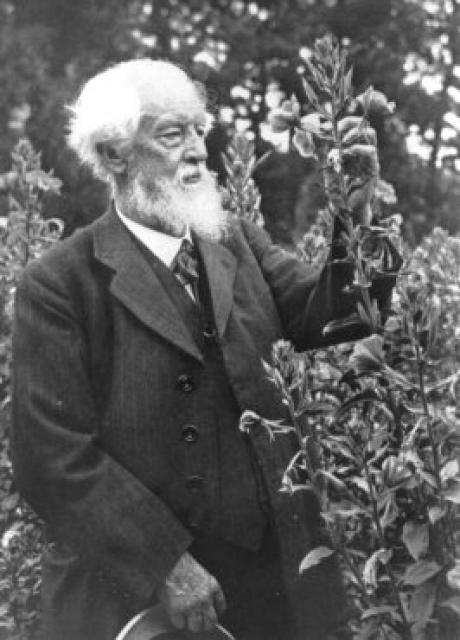
From a young age, Hugo showed a great interest in botany. He won several prizes for his herbarium collections while attending grammar schools in both Haarlem and The Hague, where his family later moved. He continued to study botany at Leiden University, with a focus on experimental botany as described in Julius Sachs' textbook "Lehrbuch der Botanik" published in 1868. He was also deeply influenced by the works of Charles Darwin and his theory of evolution, despite the skepticism it faced in society.
Research and Contributions
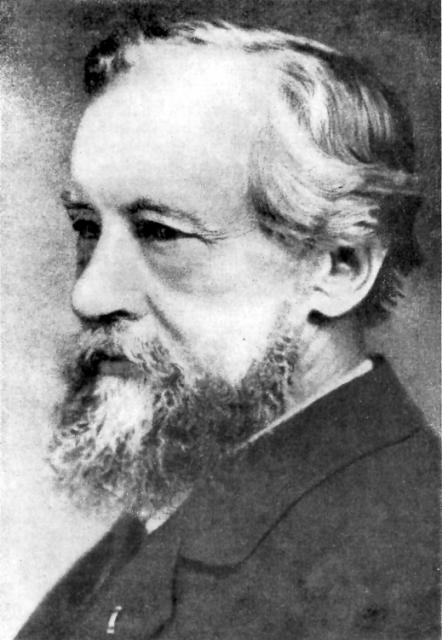
De Vries wrote his dissertation on the influence of heat on plant roots. In 1870, he attended lectures on chemistry and physics at Heidelberg University and conducted research on plant growth in Julius Sachs' laboratory in Würzburg. From 1878 to 1918, De Vries worked as a professor at the University of Amsterdam and served as the director of Amsterdam's Botanical Institute and Garden.
De Vries began his research by studying osmotic pressure and its role in the life of plant cells. He focused on the phenomenon of plasmolysis, the shrinking of cells in a solution with a higher concentration than their contents. He developed a method for determining osmotic pressure in cells and introduced the concept of an "isotonic solution."
De Vries is best known for his development of the mutation theory, which stated that mutations were the only way to form stable new forms. He reached this conclusion through his observations, which led him to believe that a species could suddenly split into several new species. De Vries conducted a thorough and systematic study of the mutation process, making him the first to do so in history. He published his monograph "Intracellular Pangenesis" in 1889.
In 1900, De Vries published his results from statistical analysis of plant breeding experiments. These results could only be explained by the existence of independent hereditary factors. Interestingly, he reached this conclusion independently of German botanist and geneticist Carl Correns and Austrian Erich von Tschermak, who were studying the same question at the same time. All three scientists obtained similar data to Gregor Mendel's famous experiments published in 1866. De Vries confirmed the principles of heredity discovered by Mendel.
Later Years and Legacy
In 1918, De Vries officially retired but continued to work on developing his theory of evolution at his estate in Lunteren. He passed away in Lunteren on May 21, 1935.
De Vries' theory, which presented a modern form of Darwin's evolutionary theory based on knowledge of mutations and natural selection, gained widespread recognition during his lifetime.


