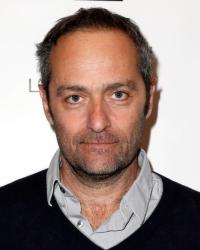
Hugo Haas
- Hugo Haas: Early Life and Career
- Rise to Stardom in Czech Cinema
- Escape from Nazi Occupation
- Hollywood Career
- Return to Europe and Final Years
Hugo Haas: Early Life and Career
Hugo Haas was born in Brno, Czechoslovakia, into a Jewish family. After completing high school, he pursued singing lessons and made his acting debut on the stage of the National Theater in Brno. He went on to perform in Olomec and Ostrava before joining the National Theater in Prague in 1925, where he played roles in three silent films.
Rise to Stardom in Czech Cinema
Throughout the 1930s, Haas rose to prominence in Czech cinema, starring in popular comedies such as "Muži v offsidu" (1931), "Dobrák voják Švejk" (1931), "Život je pes" (1933), and "Až přiletí čáp" (1935). In 1936, he directed his first film, the comedy "Velbloud uchem jehly" (The Camel Through the Needle's Eye).
Escape from Nazi Occupation
With the Nazi occupation of Czechoslovakia in 1939, Haas, being Jewish, was forced to flee the National Theater in Prague. He escaped to France and then, via Spain and Portugal, made his way to the United States.
Hollywood Career
In Hollywood, Haas played supporting roles in numerous films starting in 1944, often portraying characters of different nationalities. He also transitioned to directing, with his most notable work being the 1957 film noir "Lizzie," starring Eleanor Parker. His last directorial effort in the US was the autobiographical drama "Paradise Alley" (1962).
Return to Europe and Final Years
In the early 1960s, Haas returned to Europe. He visited Czechoslovakia in 1963 for the 80th anniversary of the National Theater. His final acting performance was in the British detective film "The Strange Affair." Haas passed away in Vienna and was buried in a Jewish cemetery in Brno. In 2000, he was posthumously made an honorary citizen of his hometown.