Hulegu Khan
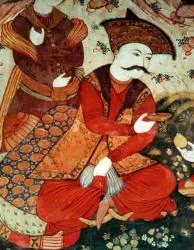
Hülegü Khan, also known as Hulegu, led the Mongol expansion into western Asia and founded the Ilkhanate, a Mongol-ruled state centered in Iran and Iraq. A grandson of Genghis Khan, he carried the empire’s military power to the gates of major cities, including Baghdad, whose capture in 1258 ended the Abbasid caliphate there. His campaigns changed the region’s political order, while their human cost made his name feared across the Middle East.
A Prince of the Mongol Empire
Born around 1217, Hülegü was a son of Tolui and grandson of Genghis Khan. His brothers included Möngke, who became Great Khan, and Kublai, later founder of China’s Yuan dynasty. In the early 1250s, Möngke assigned Hülegü a major western campaign: to subdue territories in Persia and the surrounding lands that had resisted Mongol authority.
Hülegü moved west with a large army, accompanied by engineers, administrators, and other specialists. His forces first targeted the Nizari Ismaili strongholds in Iran, taking Alamut in 1256. The campaign then continued into Iraq. In 1258, after the Abbasid caliph al-Musta‘sim refused to submit, the Mongols besieged Baghdad. The city fell in February, and the caliph was killed. The sack devastated a major center of learning, trade, and political authority, bringing the Abbasid caliphate’s long rule from Baghdad to an end.
The Ilkhanate and the Syrian Campaign
After Baghdad, Hülegü established his power across Iran, Iraq, and neighboring territories. His realm became known as the Ilkhanate, meaning a khanate subordinate to the Great Khan, although it developed its own court and political identity. Hülegü’s base in Azerbaijan connected him to the Mongol imperial world while placing him near the frontiers of Syria and the Caucasus.
In 1259 he launched a campaign into Syria. Mongol forces took Aleppo and Damascus, and the advance appeared to threaten Egypt. But news of Möngke’s death in 1259 changed Mongol priorities. Hülegü withdrew much of his army eastward to take part in the succession struggle, leaving a force under the general Kitbuqa. In 1260, the Mamluks of Egypt defeated that army at Ayn Jalut in Palestine, halting the Mongol advance into Egypt and establishing a new balance of power in the region.
Legacy of Conquest
Hülegü remained a powerful ruler in western Asia until his death in 1265. His campaigns had toppled old centers of authority and created a new Mongol state whose descendants would rule Iran and surrounding regions for generations. The Ilkhanate later became more independent from the wider Mongol Empire, and its rulers adapted to the diverse societies under their control.
Hülegü’s legacy is inseparable from both state-building and destruction. The Ilkhanate became a lasting political framework in the region, but the devastation of Baghdad and the vast toll of Mongol warfare left deep scars. His story shows how the Mongol Empire could remake distant lands in a single generation—through conquest, new dynasties, and encounters between worlds that had once seemed far apart.