Humphrey Gilbert
 Great Britain
- Biography of Humphrey Gilbert
- Quest for the Northwest Passage
- Governor of Munster and Knightship
- General Inspector and Expedition to the Netherlands
- Plan for Newfoundland and Colonial Expedition
- The Newfoundland Expedition
- Tragic End and Legacy
Biography of Humphrey Gilbert
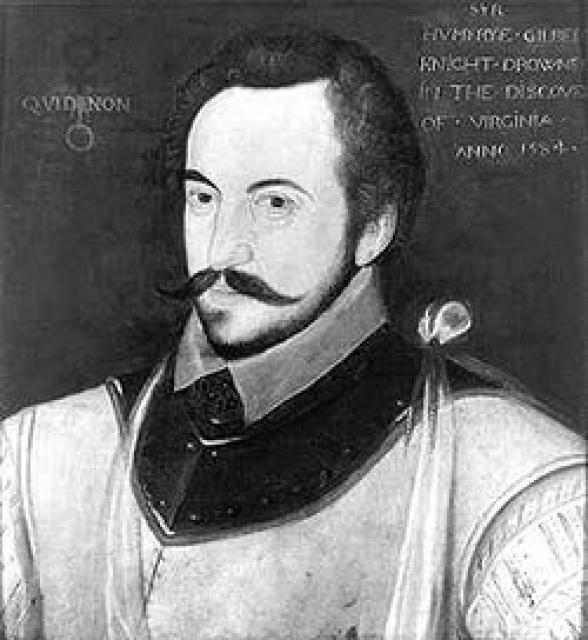
Humphrey Gilbert was an English navigator and explorer. He was born in Devonshire and received his education at Eton and Oxford. In 1559, he joined the military service and served in the English troops in France in 1563. In 1566, he went to Ireland as a captain in Henry Sidney's army and was later promoted to the rank of colonel.
Quest for the Northwest Passage
During this time, Gilbert had a strong desire to discover the Northwest Passage and, starting from 1566, he unsuccessfully requested Queen Elizabeth to fund an expedition. His famous petition, titled "Discourse of a Discoverie for a New Passage to Cataia" in 1576, later proved useful to English navigator Martin Frobisher and other Arctic explorers in their attempts to find the passage.
Governor of Munster and Knightship
Members of Gilbert's family had claims to lands in Munster, Ireland, and wanted to establish an English colony there. In order to resolve the land disputes with Irish rebels, Gilbert was appointed as the governor of Munster in 1569. In 1570, he was knighted for his service in Ireland and a year later became a member of the House of Commons from Plymouth, actively supporting the queen's policies.
General Inspector and Expedition to the Netherlands
In recognition of his loyalty, Queen Elizabeth appointed Gilbert as the General Inspector of Cavalry, Artillery, and Armories in England. In 1572, under the secret orders of the queen, Gilbert led a contingent of 1,500 men to assist the Netherlands in their war against Spain.
Plan for Newfoundland and Colonial Expedition
In 1577, Gilbert presented a plan to the queen titled "How Her Majesty Can Annoy the King of Spain." The plan proposed sending a large number of ships to Newfoundland and capturing the Spanish fishing fleet there. The following year, Gilbert was given the task of establishing a colony in the New World.
The Newfoundland Expedition
In 1583, Gilbert set sail from Plymouth with five ships and 260 men. On August 3rd, he arrived at the shores of Newfoundland and founded a small colony called St. John's. With a fleet of three remaining ships, Gilbert attempted to explore the coast south of St. John's. During this journey, his largest ship was lost, and he decided to return to England with the remaining two ships.
Tragic End and Legacy
On September 9th, 1583, Gilbert's ship, the "Squirrel," was lost in a storm off the coast of the Azores. Gilbert tragically perished in the shipwreck. Despite the failures of his expeditions, Gilbert's efforts and ideas laid the groundwork for future English exploration and colonization in the New World.