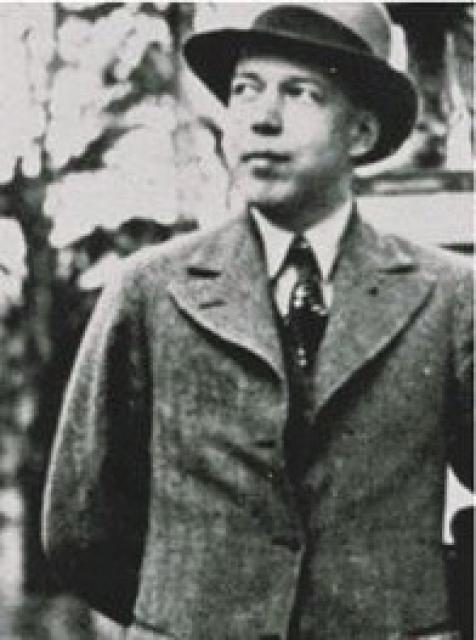
Mika Toimi Waltari
 Finland
- Mika Waltari: An Acclaimed Finnish Literary Titan
- Family Heritage and Early Life
- Literary Career
- Immortalized on the Silver Screen
Mika Waltari: An Acclaimed Finnish Literary Titan
Mika Waltari, a prominent Finnish author, gained global recognition for his historical masterpiece "The Egyptian" (1945). He held the esteemed position of Academician at the Finnish Academy.
Family Heritage and Early Life
Waltari traced his lineage to rural roots through both his parents, who later established an urban connection through his grandparents. His paternal side hailed from Hattulan, while his maternal heritage lay in Pornainen. Waltari's grandfather, a stone mason who relocated to Helsinki, adopted the surname "Waltari" from their family farm. His father, Тойmi, and uncle, Тойvo, pursued theological studies, instilling in Waltari a "theological heritage." As a second-generation intellectual and writer, he would later translate his family experiences into his literary works.
The loss of his father in 1914, when Waltari was five, profoundly impacted his life. His mother raised and educated him alongside his two brothers, and his protagonists often shared a close bond with their mothers and an absent paternal figure. His uncle Тойvo, a Doctor of Theology, and his father's friend Jaalo Sihtola, an engineer and art collector, became fatherly figures in his life. Another notable influence was his mother's friend, road master Kalle Uusitalo.
Literary Career
In 1925, Waltari published his poetry collection "Flight from God." His novel "The Great Illusion" (1928) explored the disillusionment of middle-class youth. In subsequent works, such as "City of Joy and Despair" (1936), "A Stranger Came into the House" (1937), and "From Father to Son" (1942), he delved into the complexities of capitalist societies.
Waltari's historical novels garnered him international acclaim. "The Egyptian" (1945), "Turms, the Immortal" (1955), "Felix the Happy" (1958), "The Secret of the State" (1959), and "The Enemies of Mankind" (1964) transported readers into ancient and distant worlds.
Immortalized on the Silver Screen
In 1954, Michael Curtiz directed the film adaptation of "The Egyptian," starring Waltari's signature protagonist. Waltari's works have been adapted for the screen in Finland, Sweden, the United States, and even Iran, leaving an enduring legacy beyond the written page.


