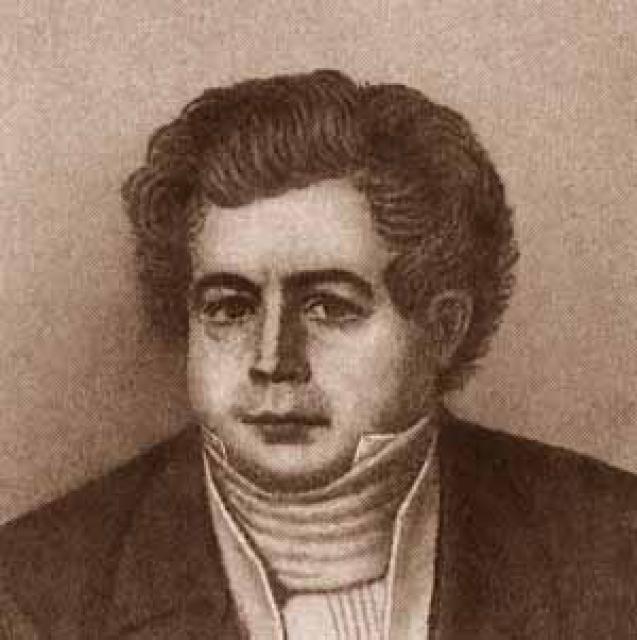
Iakov Brianskij
- Grigory Bryansky: A Renowned Actor
- The Birth of a Star
- Joining the "Young Troupe"
- Debut and Triumph
- Krylov's Guidance and Tragic Ambitions
- Tragedy's Embrace
- Challenging Tradition
- Success as Othello
- Rivalry and Collaboration
- A Versatile Talent
Grigory Bryansky: A Renowned Actor
Early LifeGrigory Bryansky's early life remains shrouded in mystery. It was not until he found his calling in the theater that history began to record his journey.
The Birth of a Star
On a fateful summer evening in 1811, Bryansky (then known as Grigoryev) graced a gathering at Prince Alexander Shakhovskoy's residence with a captivating performance of the role of Polynices from Ozerov's tragedy "Oedipus in Athens." His magnetic presence and raw talent elicited thunderous applause from the esteemed guests, including Ivan Krylov and Pavel Katenin. This performance sealed Bryansky's destiny as an actor.
Joining the "Young Troupe"
Prince Shakhovskoy, a prominent figure in Russian theater, had established a "young troupe" to nurture emerging talent. Recognizing Bryansky's potential, he welcomed him into this collective of aspiring actors and actresses. Bryansky partnered with the talented Shiryaeva, sharing the stage for leading roles.
Debut and Triumph
Under the stage name Bryansky, he made his debut on September 11, 1811, in the role of "Shakespeare in Love." Despite the daunting presence of the legendary Yakovlev, Bryansky's performance as the iconic playwright was a resounding success. The actor's natural talent outshone his nerves, earning him the admiration of even his senior colleague.
Krylov's Guidance and Tragic Ambitions
Ivan Krylov, a renowned writer and playwright, advised Shakhovskoy to showcase Bryansky's abilities in comedies and dramas, initially denying him the tragic roles the young actor yearned for. With patience and determination, Bryansky excelled in numerous comic and vaudeville performances.
Tragedy's Embrace
Bryansky's burning desire for tragedy finally found expression when Prince Shakhovskoy penned "Abulfar" for him. In this adaptation from French, Bryansky and the esteemed actress Katerina Semyonova captivated audiences with their raw emotion and nuanced performances. For the first time, Bryansky experienced the triumph of a tragic artist.
Challenging Tradition
Bryansky's keen artistic intuition led him to question the prevalent pseudo-classical style, which emphasized stylized recitation. He believed in the power of natural delivery and genuine emotion, defying the entrenched conventions of the time.
Success as Othello
Following Yakovlev's untimely passing in 1817, a wider stage opened up for Bryansky. He skillfully inherited some of the late actor's celebrated roles, notably Othello, proving himself a worthy successor to the legendary tragedian.
Rivalry and Collaboration
The arrival of renowned tragedian Vasily Karatygin in 1820 presented a formidable challenge to Bryansky. After several years of competition, he gracefully relinquished certain tragic roles to his rival, transitioning to supporting characters and mature roles.
A Versatile Talent
Bryansky's extensive repertoire, encompassing over 30 major roles, set him apart. He played a wide range of characters, from noble fathers to kings and statesmen, with equal brilliance. His versatility and dedication made him an irreplaceable figure on the Russian stage.


