Iakov Shogolev
 Ukraine
Biography of Yakov Shchogolev
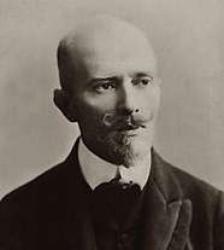
Yakov Ivanovich Shchogolev was a Ukrainian poet born in 1824 in the city of Akhtyrka, Kharkov Governorate. He initially studied at the Kharkov People's School, then at the Kharkov 1st Gymnasium and Kharkov University, where his classmates included N.F. Shcherbin and N.I. Kostomarov. After completing his studies, Shchogolev first served in the department of state property, then as a secretary of the Kharkov city administration. Having accumulated a small fortune, he retired in 1871 and led a secluded life, devoting part of his time to composing poetry in the Malorussian language. Shchogolev passed away in Kharkov on May 28, 1898.
Poetic Work
Shchogolev began writing poetry in the 4th grade of the gymnasium under the guidance of his teacher, Inozemtsev. In his youth, he wrote both Russian and Malorussian poems, which were published in "Molodika" by Betskoy. However, influenced partly by the harsh criticism of Belinsky and partly by his career, Shchogolev temporarily abandoned poetry and only returned to it in 1876, in his old age. His literary significance as a poet rests entirely on his two collections: "Vorsklo" (Kharkov, 1883) and "Slobodzhanshchina" (Kharkov, 1898). The first collection contains 75 poems, while the second has 103. Additionally, several poems were published in Galician-Russian editions. The overall character of Shchogolev's poetry is gloomy and pessimistic.
Conservative Beliefs
Shchogolev, a true and typical Malorussian in appearance, temperament, and character, had a strong command of the Malorussian language and had a deep affection for his native "Akhtyrshchyna." However, he held extremely conservative beliefs and was a reader and admirer of the "Moskovskie Vedomosti." He was a deeply religious individual and a great lover of music. Shchogolev had an aversion to science, knowledge in general, and the idea of progress in particular. All these traits, along with the effects of old age and illness, are reflected in his poems. The main drawback of his poetry is its tendency towards didacticism and moralization. Many otherwise excellent poems are spoiled by these concluding moral lessons.
Notable Works
Despite these flaws, both collections contain outstanding works such as "U Poli" ("By the River"), "Kvitka" ("Flower"), "Burlaky" ("Boatmen"), "Khata" ("Hut"), "Pozhega" ("Fire"), "Vesna" ("Spring"), "Zaporozhets" ("Cossack"), "Cherevychky" ("Shoes"), "Vechir" ("Evening"), "Kosary" ("Reapers"), "Miroshnik" (in "Vorsklo"), "Zimniy Ranok" ("Winter Morning"), "Hortytsia" (a historical island), "Traven" ("May"), "Klimentove Mlyny" ("Kliment's Mills"), "Barvinkova Stinka" ("Barvinko's Stinka"), "Nich" ("Night"), "V Dibrovi" ("In the Oak Grove"), "Zimniy Shlyakh" ("Winter Road"), "Subboty Svyatogo Dmytra" ("Saturdays of Saint Dmitry"), and "Babusina Kazka" ("Grandma's Tale" in "Slobodzhanshchina").
Legacy
In terms of poetic style and language, Shchogolev is reminiscent of Apollon Maykov, though lacking his diversity. He has a tendency to draw inspiration from folk beliefs, legends, songs, and fairy tales. His best poems are infused with his love for his homeland, which he carried with him from his youth. Overall, his poetry leans towards a somber mood. Both collections, especially "Slobodzhanshchina," which was published on the eve of the poet's funeral, are haunted by the ominous specter of death. Many of his poems bear the imprint of lost life ideals. Returning to poetry in old age, after experiencing great personal loss, Shchogolev poured his soulful sorrows into his verses. One of the most powerful and yet darkest poems of this nature is "Subboty Svyatogo Dmytra," which depicts the procession of deceased spirits and repeatedly invokes God's mercy. From this and other later poems by Shchogolev, it is evident that the poet held onto only one religious hope in the final years of his life.