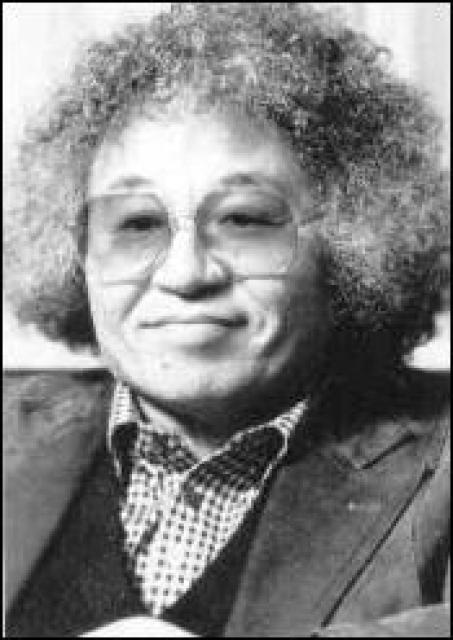
Shotaro Ishinomori
 Japan
JapanSetsuro Ishinomori - Biography
Setsuro Ishinomori was a renowned writer and one of the creators and classics of the modern manga industry. He began writing manga in 1950 while still studying in high school, and together with his friends, he established an amateur manga studio. His first major publication was the manga "Second-Rate Angel" (1954) in the magazine "Shounen Sunday." After completing his studies in 1956, Ishinomori moved to Tokyo and settled in the same building as Osamu Tezuka, his master and teacher. His roommate at the time was the future famous artist Fujio Akatsuka. It was around this time that Ishinomori adopted his first pseudonym, Shoutarou Ishimori.
In addition to working on manga, Ishinomori collaborated with Tezuka on the production of the feature film "Journey to the West" (1960) by Toei Douga studios and director Taiji Yabushita, based on Tezuka's manga "The Adventures of Goku" (1952-1959), which was in turn inspired by the classic Chinese novel "Journey to the West" by Wu Cheng'en.
In 1963, Ishinomori began publishing his first highly acclaimed manga, "Cyborg 009" (1963-1998, with breaks), for which he received the Kodansha Publishing "Best Children's Manga" award in 1966. This manga was subsequently adapted into multiple anime series. In 1964, Ishinomori started publishing his first shoujo (girls') manga, "That Very Strange Girl," later renamed "Sarutobi Ecchan" (1964, 1971), in an attempt to promote its unsuccessful anime adaptation (1971-1972). However, the TV series by Toei Douga still did not gain popularity.
In 1966, Ishinomori began publishing the manga "Sabu and Ichi's Detective Agency" (1966-1968), which was also adapted into an anime. He received the Shogakukan Publishing "Best Manga" award for it in 1968. In the same year, Ishinomori founded "Ishimori Professional, INC," a company that produced animated and live-action adaptations of his subsequent works.
During the late 1960s, Ishinomori's student and assistant was Go Nagai. In 1971, Ishinomori published the manga "Primitive Boy Ryu," which was also adapted into an anime (1971-1972). However, this anime series gained more popularity outside of Japan, particularly in Italy, than in Japan itself.
On the other hand, the manga "Kamen Rider," serialized from 1972, became the basis for a series of highly popular films and TV shows, essentially creating a new genre in Japanese cinema called "sentai tokusatsu show" or "youth series with special effects." Some of his other manga, such as "Android Kikaider" (1972), "Himitsu Sentai Goranger" and "Kikaida 01" (both 1973), also belonged to this genre. In the 1970s, Ishinomori published the science fiction comedy manga "Go, Robokon!" (1975).
In 1983, Ishinomori co-wrote the screenplay for the full-length anime film "Genma Wars," directed by Rintaro and with character designs by Katsuhiro Otomo. He collaborated with science fiction writer Kazumasa Hirai on this project.
In 1984, Ishinomori began the publication of the realistic manga "Hotel" (1984-1998), which portrayed the lives of fictional employees in a luxurious hotel in the center of Tokyo and how they dealt with various problems that arose while working. In 1990, this manga was adapted into a live-action TV series.
In 1986, to celebrate the thirtieth anniversary of his professional career, Ishinomori changed his pseudonym to Shoutarou Ishinomori. Additionally, his previous pseudonym had four syllables, and in Japan, the number four is considered unlucky.
However, his truly groundbreaking work was the manga "Introduction to Japanese Economics in Pictures" (1986), a serious and accessible exploration of the Japanese economy. This manga expanded the possibilities of the art form and paved the way for numerous contemporary Japanese educational comic books. Ishinomori received numerous awards for this work, including the Grand Prize of the Japan Cartoonists Association in 1988. He later became the head of the association. In 1987, Studio Deen released a TV version of Ishinomori's educational textbook.
Ishinomori also created a 10,000-page manga textbook called "The History of Japan in Pictures," which is one of the longest manga in Japanese history. Both of these educational manga textbooks continue to be considered classics and are still being republished.
In 1993, Ishinomori was diagnosed with a heart disease. He spent the following six years confined to his bed but continued to work tirelessly, completing his final works.
In 1995, Ishinomori became the honorary chairman of the Media Technology Information Center in Ueda City, known as "Medialand." This was a natural role for him as he always emphasized that "manga is multimedia, and manga concepts will be crucial in the multimedia society of the 21st century." He actively participated in promoting the activities of Medialand and the dissemination of the latest technologies.
In 1998, Ishinomori passed away without completing the final chapter of "Cyborg 009."
Ishinomori, a pioneer of Japanese cyberpunk and a classic children's science fiction author, devoted his immense creative and organizational efforts to making manga an all-encompassing art form. Like his teacher Tezuka, he opened new horizons for his followers and inspired them to surpass themselves and not adhere to stagnant conventions. His manga textbooks may continue to educate generations of young Japanese and students from other countries.