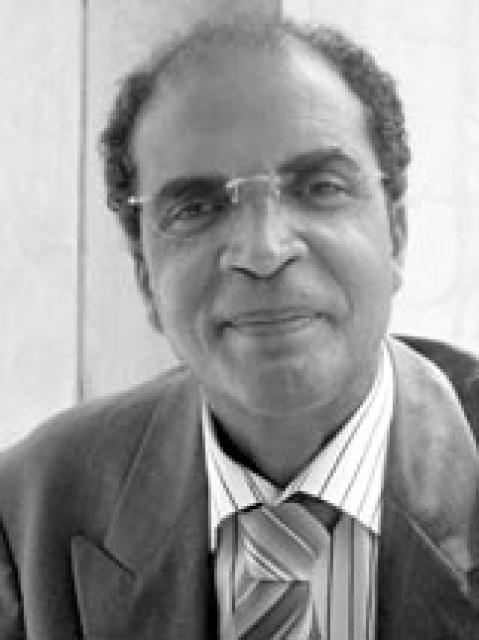
Ibrahim Al-Koni
 Libya
Libya- Libyan Author and Prose Master
- Move to Poland and International Recognition
- Literary Contributions
- Recognition and Legacy
Libyan Author and Prose Master
Early Life and EducationIbrahim Al-Koni, born in 1948 in Ghadames, Libya, is a prominent contemporary Libyan prose writer, novelist, short story writer, journalist, and public intellectual. Of Tuareg descent, he mastered Arabic at age 12 and traveled extensively throughout Libya.
Following the rise of Muammar Gaddafi and the subsequent oil boom, Al-Koni's financial situation improved, enabling him to pursue education, work, and travel. In 1974, at the age of 26, he began publishing articles on socialism and nationalism in post-colonial Libya.
After graduating from the Gorky Literary Institute in Moscow in 1977, Al-Koni returned to Libya, where he worked in the Ministry of Social Affairs, the Ministry of Culture, and as a correspondent for the J.A.N.A. news agency. He also served in embassies in Russia and Poland.
Move to Poland and International Recognition
Following the collapse of the Soviet Union, Al-Koni relocated to Poland. He worked as a correspondent for the Libyan news agency and the Libyan Cultural Center, becoming a member of the Polish-Libyan Friendship Society and editor of the journal "Polish Commonwealth." He also pursued translation and published his own Arabic short stories.
In 1994, Al-Koni moved to Goldwil, Switzerland. There, he met the Arabist Hartmann Fendrich, who subsequently translated a significant portion of his work. Al-Koni's writing gained international recognition, earning him numerous awards, including the Swiss State Prize (1995), the Libyan State Prize for Literature and Arts (1996), and the Sheikh Zayed Prize (2008).
Literary Contributions
Al-Koni has authored over 60 books, including novels, short story collections, and non-fiction essays, primarily focusing on the life and culture of the Tuareg people of the Sahara. His early works, such as "Extraordinary Prayer" (1974), explore themes of solitude and cultural displacement.
In "Grain of Gold" (1990), Al-Koni depicts the intimate relationship between the son of a tribal chief and his camel, examining the conflict between personal desires and societal norms. "The Seven Veils of Seth" (1999) delves into ancient Egyptian mythology and explores the duality of good and evil.
"Demons of the Desert" (2000) captures the harsh and unforgiving nature of the desert, while "Bleeding Stone" (2005) highlights the destructive impact of unchecked greed. "A Sip of Blood" (2008) celebrates the resilience of the Tuareg people in the face of adversity.
Recognition and Legacy
Ibrahim Al-Koni has received international acclaim for his literary achievements. He has been recognized as one of the "Fifty Outstanding Contemporary Novelists from around the World" by the French magazine "Lire" and awarded the prestigious Morocco-based Mohammed Zefzaf Literature Prize (2005). Al-Koni's work offers valuable insights into the complexities of cultural identity, human nature, and the enigmatic landscape of the Sahara.


